
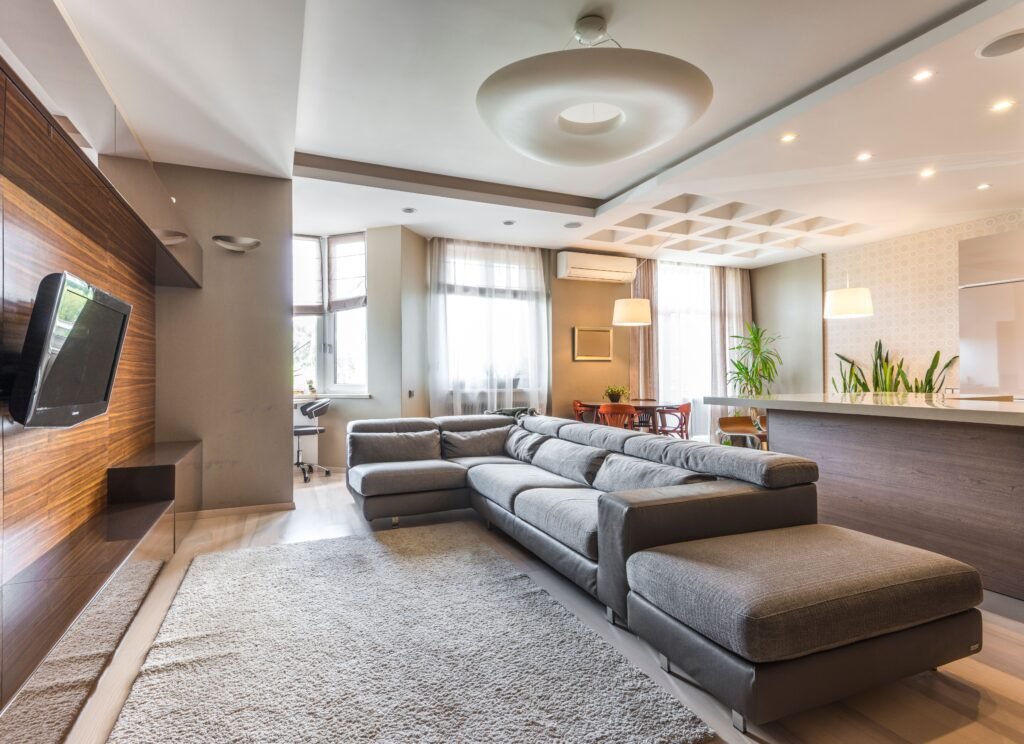
A small living room usually does not need more furniture. It needs a layout that gives each piece enough breathing room and keeps the main walking path clear. The easiest mistake is pushing every item against a wall and filling the remaining space with small tables, chairs and decor. That can actually make the room feel more crowded.
The better approach is to decide what the room needs to do first, then build the furniture arrangement around those jobs.
The Fast Answer
Start with the largest fixed piece, usually the sofa. Place it where it creates a clear conversation or TV zone without blocking the main entrance. Keep the primary walking route open, use a properly sized rug to visually connect the seating, and choose tables that leave enough space to move comfortably. If you need extra seating, favor one flexible chair or an ottoman over several small pieces.
For more visual inspiration, see Feed Flow’s small living room layout with TV and sofa placement and living room ideas that look expensive.
1. Measure the Room Before Moving Anything
Measure the room length and width, then note doors, windows, radiators, outlets and any awkward corners. Measure the sofa, chairs, TV stand and coffee table too. A quick floor plan on paper is often enough.
Do not measure only the furniture footprint. You also need circulation space. A beautiful sofa arrangement is not useful if someone has to squeeze sideways every time they walk to the kitchen.
2. Choose the Main Focal Point
Most living rooms naturally revolve around a TV, fireplace, window view or conversation area. Pick one primary focal point instead of making every wall compete for attention.
If the TV is the focal point, orient the sofa toward it without forcing every seat into a straight line. If the view is better than the screen, let the seating face the room instead.
3. Build Around the Sofa
The sofa should establish the room’s basic geometry. In a narrow room, a sofa against the long wall can preserve a wider walking lane. In a more square room, floating the sofa slightly away from the wall can create a stronger seating zone.
Do not automatically push the sofa into a corner. If leaving even a small gap improves access or allows a slim lamp or side table, that gap may make the whole room feel more intentional.
4. Create One Clear Walking Route
Pick the route people naturally use through the room and protect it. The most important path is usually between the entrance and another frequently used area such as a kitchen, hallway or balcony.
Try not to make people walk between the coffee table and sofa to reach the door. Move the table, rotate the seating or use a smaller piece before accepting an awkward path.
5. Use the Right Coffee Table Size
A coffee table should relate to the sofa rather than simply filling an empty center. A table that is too large makes a compact room feel blocked. One that is too small can look disconnected.
When space is tight, consider a round table, nesting tables or an ottoman with a tray. Flexible pieces give you a surface when needed without creating a permanent obstacle.
6. Use a Rug to Connect the Seating
A rug can make a small living room feel more organized because it visually defines the seating zone. The common mistake is choosing a rug that is so small that the sofa appears to sit outside it.
Choose the largest size that works with your circulation and furniture. Even when the rug cannot fit under every piece, try to get the front legs of the main seating onto it.
7. Add Only the Extra Seating You Actually Need
If you regularly host guests, one compact accent chair may be more useful than two bulky chairs. An ottoman can provide seating, foot support and occasional table space.
In a very small room, flexible furniture earns its floor space. Decorative seating that is rarely used usually does not.
8. Keep the Vertical Space Calm
Small rooms can feel crowded even when the floor is tidy. Too many shelves, frames and tall storage pieces create visual weight. Choose a few larger elements instead of covering every wall with small objects.
If you need storage, use one intentional vertical solution rather than several unrelated pieces. The same principle appears in Feed Flow’s small bedroom ideas and 10×10 work-from-home setup.
Common Layout Mistakes
- Buying furniture before measuring the room.
- Blocking the natural entrance path.
- Using a coffee table that is too large.
- Adding several tiny storage pieces instead of one useful solution.
- Choosing a tiny rug that separates rather than connects the seating.
- Trying to make every wall a focal point.
A Simple Layout Test
Once everything is placed, walk through the room with your hands full. Sit in every seat. Open drawers and doors. Check the TV from the main seating position. Turn lights on at night. If you repeatedly bump into something or have to move around furniture awkwardly, the layout needs another pass.
FAQ
Should a sofa touch the wall?
Not always. It depends on the room shape and circulation. A small gap can help define the seating area, but preserving walking space matters more than following a styling rule.
Where should a TV go in a small living room?
Place it where the main seating can view it comfortably without blocking windows, doors or the main route through the room. Avoid making the TV dictate every piece of furniture if the room has another strong focal point.
How can I make a small living room look bigger?
Prioritize clear floor paths, appropriately scaled furniture, visual continuity and fewer competing objects. Mirrors can help, but layout usually has a bigger effect than adding more decor.
Final Takeaway
The best small living room layout is not the one that fits the most furniture. It is the one that makes movement, conversation and everyday use feel easy. Start with measurements, protect the main path, build around the sofa and add only pieces that solve a real need.
For a broader room-by-room approach, continue with Feed Flow’s Ultimate Small-Space Home Guide.
nn
Related Feed Flow Guides
For more practical ideas, read this related Feed Flow guide and this companion article.
Further reading: https://www.ikea.com/us/en/rooms/living-room/