
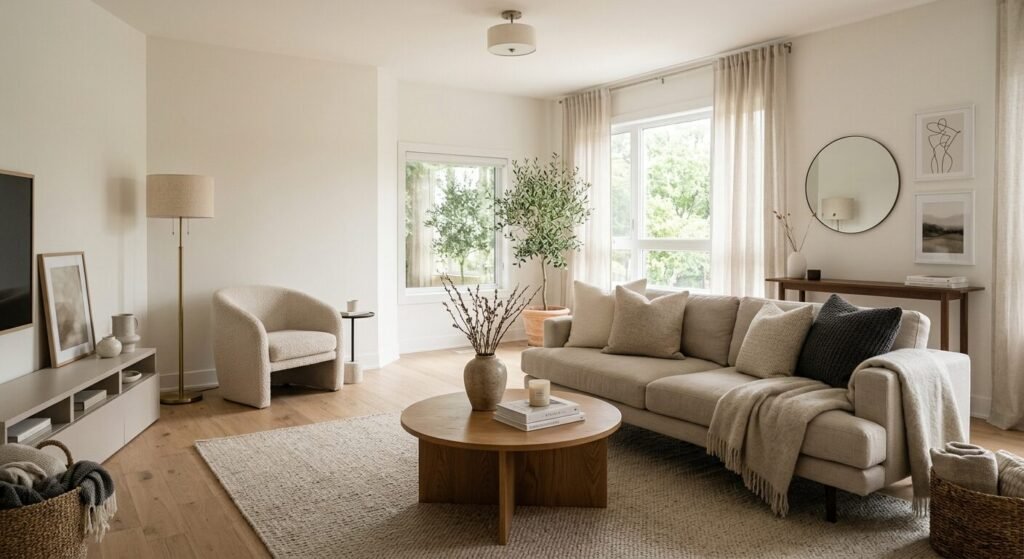
An apartment living room can look considered and inviting without expensive furniture. The biggest difference usually comes from proportion, a clear layout, layered lighting and a small number of materials that work together. Start with the pieces you already own, identify what feels out of scale, and spend only where a change will make the room work better.
17 living room ideas for apartments
1. Choose a rug that fits the seating area
A rug that is too small can make the furniture feel disconnected. Ideally, place at least the front legs of the sofa and chairs on the rug, while leaving a sensible border of visible floor. Measure before buying.
2. Hang curtains higher
Mount the curtain rod above the window frame when the wall and rental rules allow it. Longer curtains can draw the eye upward; make sure the panels clear heaters and do not drag where they could become a trip hazard.
3. Layer the lighting
Combine the main ceiling light with a floor lamp or table lamp. Several modest light sources create a more flexible evening atmosphere than one harsh fixture.
4. Give the room one visual anchor
Choose one focal point, such as a piece of art, a distinctive lamp or a well-styled bookshelf. Too many competing statement objects can make a small room feel busy.
5. Keep the main walkway clear
Arrange seating around how people enter and move through the room. A clear path often improves the room more than adding another decorative item.
6. Pick side tables that suit the sofa
Tables should be easy to reach from the seat and not block drawers, doors or walkways. Matching pieces can look tidy, but coordinating shapes and finishes can feel more personal.
7. Use cushions for texture
Mix a few textures—such as linen, knit or velvet—within a limited color family. A large pile of cushions can take up useful seating space, so use only what you will actually move and use.
8. Repeat two or three colors
Repeat colors in a cushion, artwork, throw or small accessory so the room feels connected. A restrained palette is a useful starting point, not a rule that every object must match.
9. Add greenery where it can thrive
A plant can soften a corner, but choose one suited to the light and the time you can give it. A healthy small plant is better than several struggling ones.
10. Hide everyday clutter
Use a lidded basket, storage ottoman or cabinet for remotes, chargers and small items. Keep frequently used things accessible rather than hiding everything in a way that makes daily routines harder.
11. Use a mirror thoughtfully
A mirror can reflect daylight or a pleasing view, but its position matters. Avoid reflecting a cluttered corner or placing a heavy mirror where it cannot be securely mounted.
12. Choose a coffee table with the right footprint
Leave enough room to walk around it and sit down comfortably. In a compact room, nesting tables or a lightweight movable table may work better than a large solid piece.
13. Style shelves in groups
Mix books with a few objects and leave some empty space. Repeating heights or colors creates rhythm; filling every shelf edge to edge can look cluttered.
14. Coordinate metal finishes selectively
Repeating a finish in a lamp, frame or handle can make the room feel deliberate. You do not need every metal to match—focus on a few visible pieces.
15. Use artwork at a sensible scale
One larger piece or a carefully arranged group often looks more intentional than many tiny frames scattered around. Hang artwork at a comfortable viewing height and use removable hanging products if permitted.
16. Make rental-friendly changes first
Try lamps, textiles, freestanding shelves and removable hooks before considering paint or permanent fittings. Check your lease and test removable products according to their instructions to avoid wall damage.
17. Edit before you buy
Remove items that do not serve a purpose, then live with the simpler arrangement for a few days. You may find that better spacing improves the room more than a new purchase.
A simple order for styling a small apartment
- Measure the room and large furniture.
- Place the sofa and define a clear route through the room.
- Choose the rug and lighting positions.
- Add curtains, cushions and a few personal objects.
- Check the layout at night as well as in daylight.
If your space also needs better storage, see our small-room storage and layout ideas. The same principle applies: make the space easy to use first, then add decorative details.