




Small Bedroom Storage Ideas for People With Too Much Stuff

When a small bedroom feels permanently messy, the problem is not always that you need better organization. Sometimes you simply have more belongings than the room can comfortably hold.
The useful question is not “Where can I put everything?” It is “What deserves the easiest space, what can move into hidden storage, and what does not need to stay here?”
Feed Flow’s Ultimate Small-Space Home Guide gives the wider room-planning framework. This guide focuses on storage when your bedroom is already full.
Start With a Storage Audit
Divide everything into four groups: daily use, weekly use, seasonal or occasional use, and rarely used.
Daily items deserve the easiest access. Seasonal items can go under the bed or into higher storage. Rarely used items should not occupy prime real estate.
1. Use the Space Under the Bed
Under-bed storage adds capacity without consuming walking space. Use shallow containers for shoes, spare bedding, seasonal clothing, luggage, or keepsakes.
Measure the clearance before buying bins. Height matters just as much as length and width.
2. Turn the Closet Door Into Storage
The inside of a closet door can hold accessories, small bags, shoes, or personal-care items. Use removable or approved solutions if you rent or live somewhere with wall restrictions.
3. Use Slim Hangers
Bulky hangers waste closet space. Slim matching hangers can make the same rail more efficient and make clothing easier to see.
Group clothing by type or use rather than creating a complicated system you will not maintain.
4. Rotate Seasonal Clothing
You do not need every season of clothing in your everyday closet. Store heavy winter pieces during warmer months and rotate them when the weather changes.
Label containers so you do not have to open every box later.
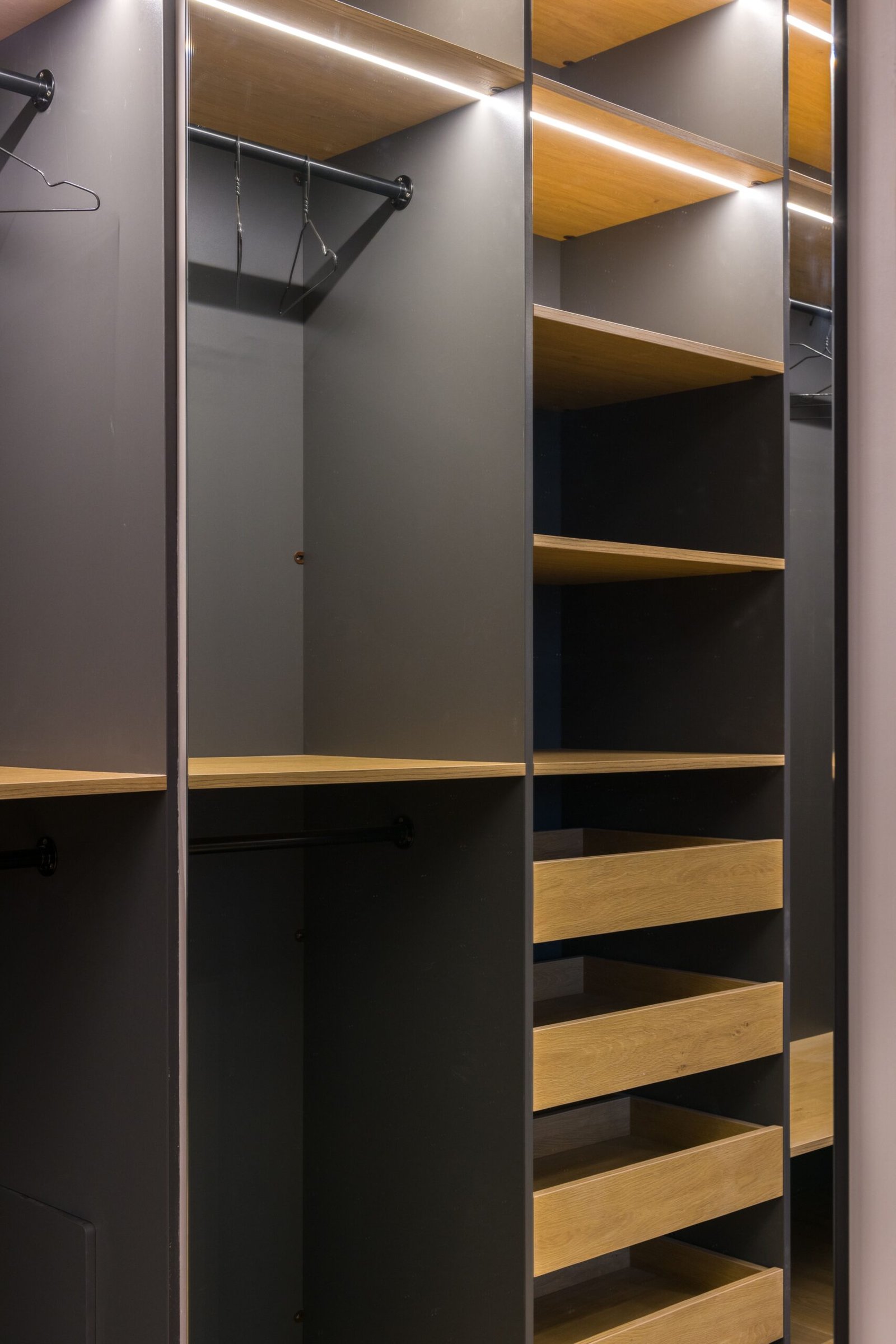
5. Choose Vertical Storage
If you need more clothing storage, consider height before width. A narrow tall dresser can provide useful capacity while taking less floor area than a wide cabinet.
Check drawer clearance and walking space before buying.
6. Rethink the Nightstand
A nightstand often becomes a junk drawer with a top surface. Keep the actual essentials: lamp, phone, charger, book, glasses, or water.
If you need more storage, a small cabinet or wall shelf may provide it without taking up the same footprint as a large bedside table.
7. Use the Back of the Bedroom Door
Hooks or an over-door organizer can hold bags, robes, accessories, or lightweight items. Keep heavy objects off systems that are not designed to support them.
8. Give Shoes One Home
Shoes scattered around the room make a small floor feel even smaller. Choose one storage zone: under-bed, closet, a narrow rack, or an approved over-door organizer.
9. Use Baskets Inside Open Shelves
Open shelves can become visually noisy when every small item is visible. Baskets create a simple category system for scarves, accessories, electronics, or miscellaneous daily items.
10. Make Your Dresser Work Harder
Use drawer dividers for small items and store clothes in a way that lets you see what you own. The goal is not a perfect folding system. It is preventing one item from hiding the rest.
11. Create a Laundry System
A hamper does not need to be a large piece of furniture. A slim vertical hamper or collapsible bag can save floor space.
More importantly, give clean and dirty clothing separate locations so laundry does not become a permanent pile.
12. Use a Headboard With Storage When You Replace the Bed
If you eventually replace your bed, a headboard with built-in shelves can provide bedside storage without separate tables. This is a future-purchase idea, not a reason to replace a perfectly good bed.
13. Move Memories Out of Daily Storage
Photos, old papers, letters, souvenirs, and sentimental objects can consume surprising amounts of space. Give them one labeled memory box instead of spreading them across drawers.
14. Store Electronics Together
Old chargers, cables, adapters, and devices often occupy several drawers. Create one electronics box and remove cables you no longer recognize or use.
15. Keep a “Maybe” Box
If you cannot decide whether to keep something, put it in a labeled box rather than letting it occupy prime storage. Revisit it later.
The goal is a decision boundary, not permanent storage for everything you are avoiding.
16. Keep Everyday Items at Eye Level
Storage should match frequency of use. Put everyday items where you can reach them quickly. Put occasional items higher or deeper.
A beautifully organized system that requires moving three boxes every morning is not convenient.
17. Do Not Buy Storage for Things You Should Remove
This is the most important rule. If you have ten organizers for things you never use, the room is not organized; the clutter is simply contained.
Before buying another container, remove duplicates, damaged items, forgotten products, and things that no longer fit your life.
18. Use a One-In, One-Out Rule
For categories that regularly grow, such as shoes, sweaters, beauty products, or bags, remove one item when a new one comes in.
19. Keep a Donation Bag Ready
Put a reusable bag somewhere accessible. When you find something you no longer want, add it immediately. When the bag is full, deal with it.
20. Use a Two-Minute Reset
Before bed, return clothes, clear the desk, put chargers back, and move stray items to their homes. Small resets prevent storage systems from becoming overwhelmed.
The Best Storage Order for a Small Bedroom
Easy reach: everyday clothes, chargers, toiletries, daily accessories.
Closet and drawers: weekly-use clothing and personal items.
High shelves: occasional belongings.
Under the bed: seasonal items, spare bedding, shoes, luggage.
Outside the bedroom: things that do not need to live there.
That last category is often overlooked. Your bedroom should not become the default storage room for the entire home.
For layout inspiration, Feed Flow’s 21 small bedroom ideas and How to make a small bedroom look bigger work well alongside this guide.
What If You Still Have More Stuff Than Storage?
Do not immediately buy a larger dresser. First measure the room, audit your belongings, and decide which categories deserve space.
If the same category repeatedly exceeds its assigned space, either reduce that category or redesign its storage. Storage should follow the amount and frequency of use.
Final Take
Good small-bedroom storage is not about squeezing more containers into the room. It is about giving important things easy homes, moving occasional items out of prime space, and reducing what does not need to stay.
Measure first. Store vertically and underneath where practical. Keep daily items accessible. And before buying another organizer, ask whether the room needs more storage or simply less stuff.
Further Reading
IKEA’s bedroom storage and organization ideas are useful for comparing practical storage approaches for clothes and everyday essentials.
Related Feed Flow Guides
For more practical ideas, read this related Feed Flow guide and this companion article.
Further reading: IKEA bedroom planning ideas.