




Round vs. Rectangle Coffee Table with an L-Shaped Couch: Which Fits Best?

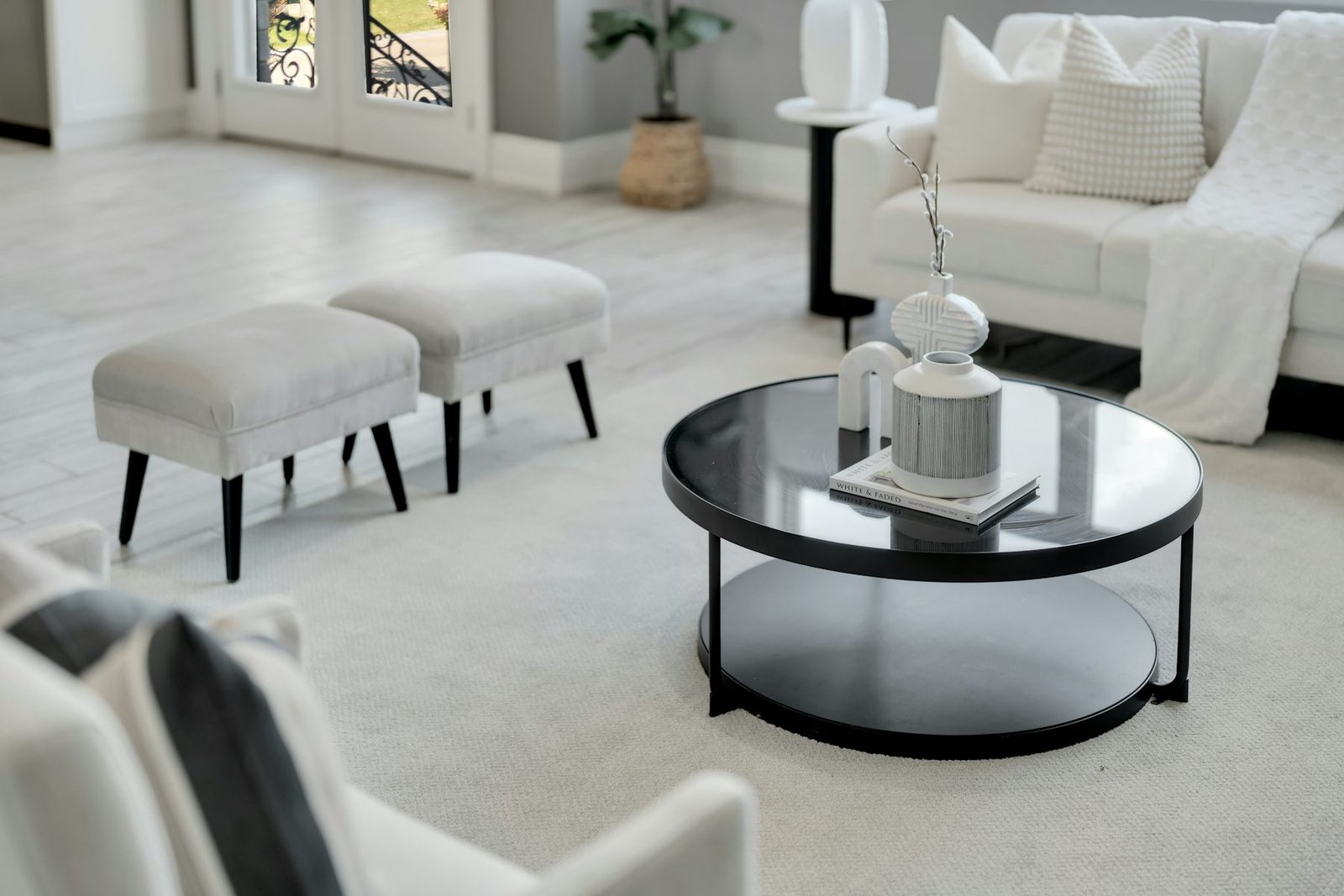
For an L-shaped couch, round or oval coffee tables are often the easiest shapes to live with, especially when one side of the sectional is a chaise. Their curved edges reduce the chance of a sharp table corner sitting in the main path around the seating area. A rectangular table can work just as well when the room has enough clearance and the table proportions match the sectional.
The Quick Answer: Round or Rectangle With an L-Shaped Couch?
Choose a round or oval table when circulation around the inside corner is tight. Choose a rectangular table when you need more tabletop area, have a long main sofa section, or want a more structured look and can maintain comfortable clearance around the table.
There is no single shape that is automatically best for every L-shaped sofa. The chaise depth, table size, room traffic and location of the TV or other furniture can change the answer.
Round vs. Rectangle Coffee Table at a Glance
| Factor | Round | Rectangular |
|---|---|---|
| Corner clearance | No projecting corners | Four corners need more attention in tight paths |
| Traffic flow | Useful where people turn around a table | Works well when paths are straight and open |
| Tabletop area | Good for compact seating groups | Usually more usable surface for long sofas |
| Visual effect | Softens angular sectional lines | Echoes the sofa’s linear geometry |
| Best starting use | Chaise sectionals and tighter rooms | Long sofas and spacious seating areas |
When a Round Coffee Table Makes Sense
1. Your Sectional Has a Chaise
A chaise projects farther into the room, so the inside corner can become a high-traffic turning point. A round table has no corners that stick into that path, which can make movement easier.
2. The Seating Area Is Compact
In a smaller room, every inch around the coffee table matters. A round table can reduce the number of hard corners you need to navigate. It does not create extra floor area, though, so you still need to measure the table diameter and surrounding clearance.
3. You Want to Soften Angular Furniture
An L-shaped sectional is built around straight lines and a 90-degree corner. A circular tabletop introduces a contrasting shape and can make the arrangement feel less rigid.
4. You Prefer a Smaller Visual Footprint
A round table can look less bulky than a rectangular table with similar overall dimensions, although the actual footprint depends on diameter and placement. Measure the furniture rather than choosing by appearance alone.
When a Rectangular Coffee Table Makes Sense
1. You Need More Linear Surface
Rectangular tables are useful when several people need access to the tabletop or when you regularly use trays, books, games and drinks. Their longer surface can work particularly well with a long main sofa section.
2. Your Room Has Straight, Open Circulation Paths
If the space around the table is open and people are not forced to turn tightly around its corners, a rectangular table can be practical and visually balanced.
3. You Want the Table to Echo the Sectional
Matching the sectional’s strong horizontal and vertical lines can create a more structured composition. This is especially effective when the table is properly scaled to the seating group.
Oval: The Middle-Ground Option
An oval table combines a longer tabletop with rounded ends. It can be useful when a round table does not provide enough surface or when a rectangle feels too rigid for the room.
For a narrow living room, compare the oval’s widest point with the available clearance. Its curved ends help, but they do not make the table smaller than its actual footprint.
Square and Nesting Tables
A square coffee table can work with a large corner sectional when the seating footprint is balanced and the room has enough space around all four sides. With a deep chaise and tight circulation, its four corners can be harder to navigate than a round or oval table.
Nesting or bunching tables are another flexible option. Separate pieces can be spread out when you need more surface and moved together when you need a clearer path.
3 Proportional Rules Before You Buy
1. Start With 14 to 18 Inches of Clearance
A practical starting point is 14 to 18 inches between the table edge and the nearest usable seating edge. If that area is also a primary walkway, increase the clearance as needed. For more detail, see How Far Should a Coffee Table Be from a Sectional? The 14-to-18-Inch Rule.
2. Compare Table Height With Cushion Height
A common design approach is to keep the tabletop level with or slightly below the top of the sectional cushions. Measure the actual cushion height because sectional seat heights vary.
3. Size the Table to the Seating Group
Rather than applying a strict two-thirds rule, compare the table’s length or diameter with the main seating span and leave enough room around it. A table that is technically proportional can still be too large if the chaise or walking route crowds it.
How Big Should a Round Coffee Table Be for a Sectional?
There is no universal diameter, but 32 to 36 inches is a useful starting range for many standard sectionals. Larger seating groups may accommodate a 40-inch table if the room leaves sufficient clearance.
Before buying, tape the proposed circle on the floor and test the route around the chaise. This is more reliable than choosing a diameter from the sofa size alone.
How to Choose Between Round, Oval and Rectangle
- Choose round when the chaise creates a tight inside corner or you want the simplest traffic path.
- Choose oval when you want more tabletop length without four sharp corners.
- Choose rectangular when you need a longer surface and have open clearance around the table.
- Choose square when the sectional is broad and balanced enough to support a centered square footprint.
- Choose nesting tables when flexibility matters more than having one fixed coffee-table footprint.
Frequently Asked Questions
What shape coffee table is best for a small living room with a sectional?
Round or oval tables are often a practical choice because they remove sharp corners from the main circulation area. The actual table size still matters; a large round table can crowd a room just as easily as a large rectangle.
Can you put a square coffee table with an L-shaped couch?
Yes. A square table can work with a large, balanced corner sectional when there is enough clearance around all four sides. With a deep chaise in a tight room, round or oval may be easier to navigate.
Is an oval coffee table good with a sectional with chaise?
Yes. An oval can provide more usable length than a similarly sized round table while keeping the ends curved. Measure its widest point and maintain the same practical clearance you would use for any other table.
How big should a round coffee table be for an L-shaped sectional?
Start around 32 to 36 inches in diameter for many standard sectionals. Go larger only when the room and surrounding clearance support it.
Final Takeaway
For an L-shaped couch, round and oval coffee tables are often easier to navigate when the chaise creates a tight interior corner. Rectangular tables remain a strong option when you need more tabletop area, have open circulation, or prefer a structured look.
The shape is only half the decision. Measure the sectional, tape the table footprint, and preserve a practical gap around the seating before buying. That will tell you more than a universal “best” shape.
For the exact spacing between a sectional and coffee table, see How Far Should a Coffee Table Be from a Sectional? The 14-to-18-Inch Rule. For sectional rug sizing, see What Size Rug Under a Sectional With Chaise? Layout & Sizing Guide.