




How to Fit a Queen Bed in a 10×10 Bedroom

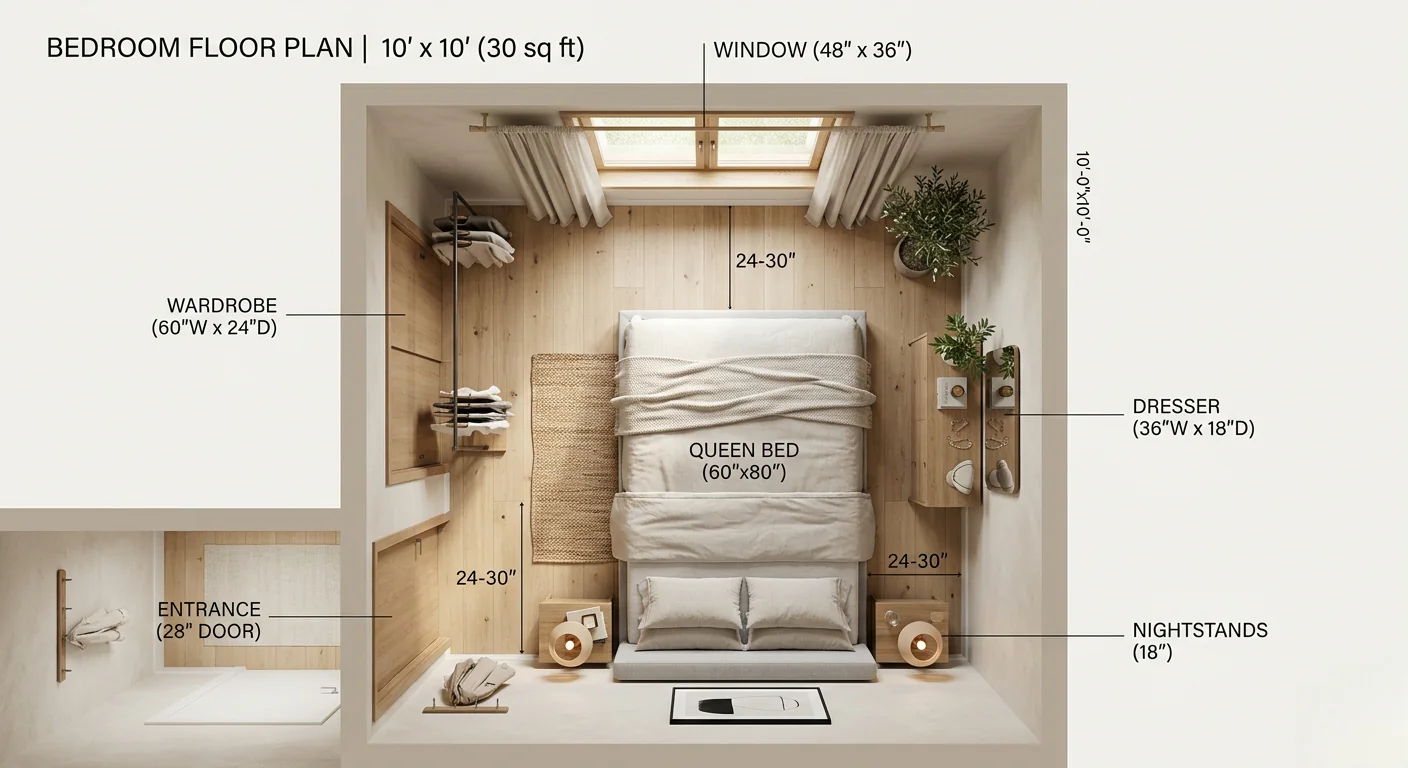
A queen bed can fit in a 10-by-10-foot bedroom, but the layout needs to be planned around the bed frame, door swing, closet access and the furniture you genuinely need. A standard queen mattress is about 60 inches wide by 80 inches long; the frame may add several inches. Measure the complete bed, not just the mattress, before choosing a layout.
Start with measurements, not furniture
Sketch the room as a 120-by-120-inch square. Mark the entry door, closet doors, windows, radiators, outlets and any built-in storage. Then draw the bed using the outside dimensions of its frame. A simple paper plan or painter’s tape on the floor can reveal whether a proposed arrangement leaves usable paths.
There is no single clearance that works for every room. Aim for a comfortable route to the bed and closet wherever possible, and avoid blocking doors or windows. If two people use the room, consider whether both sides of the bed need access or whether one side can sit close to a wall.
Three layouts worth testing
1. Center the bed on the clearest wall
This familiar arrangement can work when the wall has enough uninterrupted width and the door does not open into the bed. Use compact nightstands, floating shelves or a single bedside table rather than deep furniture on both sides. Check that drawers and closet doors can open fully.
2. Shift the bed toward one side
If centering the bed leaves narrow gaps everywhere, moving it toward one wall may create a clearer main walkway and free a corner for a slim dresser or desk. This is a practical option for a single sleeper. Keep the bed stable and leave enough room to make it and clean behind it.
3. Put storage elsewhere
Instead of adding a wide dresser beside the bed, use a tall narrow unit, under-bed boxes or wall-mounted shelves. A storage bed can help, but measure the frame carefully: some designs take up more floor area than a simple platform. Avoid placing heavy items where they can fall onto the bed.
Make a small room feel less crowded
- Choose a slim frame. A bulky headboard and wide rails can add several inches around the mattress.
- Use wall space. Sconces or clip-on reading lights can free the surface of a small nightstand.
- Keep the floor visible. Furniture with legs and a limited number of pieces can make the room feel lighter.
- Use one main storage zone. Several small baskets can create visual clutter; group everyday items together.
- Measure drawers and doors. A dresser that fits on paper may still be unusable if drawers cannot open.
Can you keep the setup under $100?
It may be possible if you already own the bed and focus on small changes rather than replacing major furniture. Start with a tape measure and floor plan, then look for second-hand bedside tables, simple hooks, storage boxes or a basic lamp. Prices vary by location and condition, so treat $100 as a spending target rather than a guarantee that every layout can be completed for that amount.
Before buying anything, list the problem each item solves. If a nightstand blocks the closet, a wall shelf may be more useful; if clothes have no home, under-bed storage could be a better first purchase than decorative accessories.
Mistakes to avoid
- Measuring the mattress but not the full bed frame.
- Blocking the entry, closet, radiator or window.
- Buying furniture before testing the layout.
- Using oversized nightstands on both sides by habit.
- Filling every empty corner with extra storage.
A quick decision checklist
Measure the bed and room, mark the doors, test at least two positions, and walk the route you will use every day. Keep only the storage you need and choose pieces that leave access to the closet and windows. For more small-space inspiration, see our living room ideas for apartments and cozy dorm room ideas.