




James Allen Review: Is It a Smart Place to Buy a Diamond Online?

James Allen Review: Is It a Smart Place to Buy a Diamond Online?
Buying a diamond online can give shoppers access to a wide range of stones and settings, but it also shifts more of the comparison work onto the buyer. James Allen is known for an online shopping experience built around diamond listings, visual inspection tools and configurable engagement-ring options. The central question is whether you can use those tools to compare specifications carefully rather than choosing from a photograph or headline price.
This review evaluates the public shopping experience and published policies, not a personal order or hands-on test. Product selection, prices and policy details can change; check the official listing and terms for the exact item and destination before paying.
Best For: Buyers comfortable comparing diamond reports and configuring a ring online.
Style: Broad online selection across natural and lab-grown diamonds, settings and custom jewelry options.
Potential Advantage: Online tools can help compare individual stones without relying only on a static product photo.
Buyer Caution: A visual viewer does not replace a grading report, a clear return policy or an understanding of the setting.
The Quick Verdict: Buyer Summary
James Allen is worth comparing if you want to select a loose diamond and pair it with a setting, or explore a broader online range before visiting a jeweler. Its official information says it offers both natural and lab-grown diamonds and supports custom jewelry. It also describes a 30-day return policy, subject to exclusions. Those details can be helpful, but the exact stone, setting and order terms should drive the decision.
- Potential strength: Product-level diamond views and reports can support side-by-side comparison.
- Best comparison method: Compare stones with similar shape, carat weight, color, clarity and cut-related characteristics, then assess the setting separately.
- Buyer caution: Do not treat a higher grade or larger carat weight as a complete measure of beauty or value.
How the Online Shopping Model Works
Online diamond shopping can make it easier to filter by budget, shape and grading details, but filters only help when you understand what they mean. A listing should be treated as a starting point: review the stone’s grading documentation, inspect the proportions and appearance, and compare the final ring price rather than the loose-diamond price alone.
Before narrowing the options, decide what matters most: the visual outline, brightness, finger coverage, metal color, setting style or a strict budget. Two diamonds with similar headline grades may still look different because proportions, inclusions, fluorescence, cut quality and viewing conditions affect appearance.
Diamond Selection and Documentation
James Allen’s public FAQ describes both natural and lab-grown diamonds. These are distinct by origin and market pricing, even though lab-grown diamonds have essentially the same crystal structure and many of the same optical and physical properties as natural diamonds. The choice is personal, but it should be made with accurate information about origin and documentation.
Look for the grading report associated with the specific stone and verify the report number when possible. The Gemological Institute of America explains diamond grading and the limits of what a report establishes. A report is not a guarantee that a diamond will look identical to another stone with the same headline grades, so review the actual stone and setting combination.
Also distinguish the diamond from the finished ring. A center stone’s characteristics do not tell you everything about the metal, prong security, band thickness, comfort or long-term repairability.
Settings and Customization
A setting changes the look and practical wear of a ring. A low-profile bezel may suit someone who wants fewer exposed edges, while a prong setting can allow more light to reach the stone but may need periodic inspection. Halo, pavé and three-stone designs have their own maintenance considerations. Ask what the setting is made from, whether the ring can be resized, and which changes count as customization.
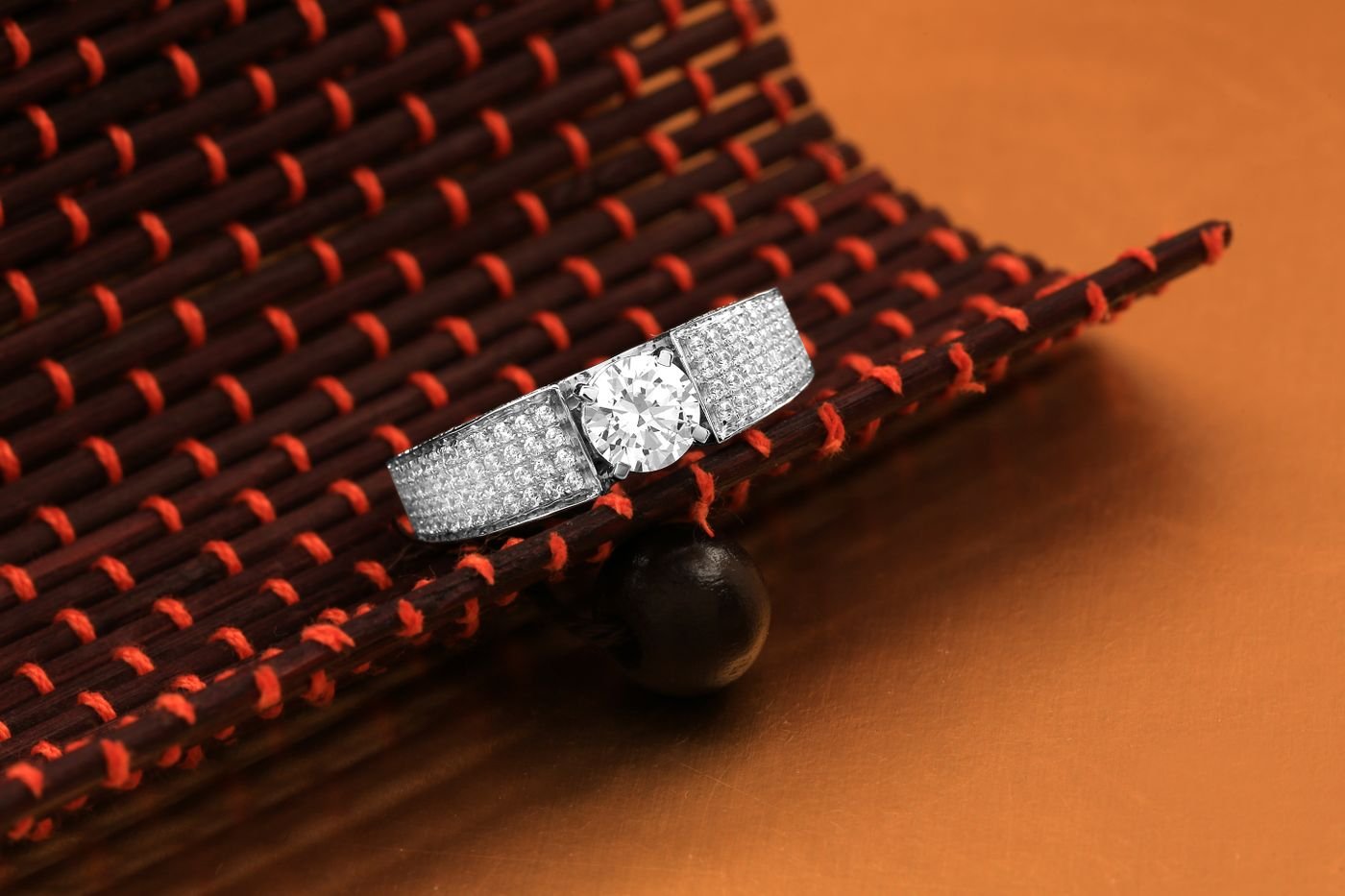
Confirm the finished ring’s measurements and estimated production timeline before committing, especially if the purchase is tied to a proposal or event date. A customized design may have different cancellation, return or resizing terms than a standard in-stock item.
Pricing and Value
Compare total cost using equivalent specifications. Include the center stone, setting, metal, side stones, taxes, delivery and any optional service. A low loose-diamond price can become a different proposition once the setting and service are added. Equally, a more expensive stone is not automatically the best choice if the visual difference is small to you.
Use a shortlist of three or four stones with comparable shape and carat weight, then compare reports, face-up appearance, setting options and the final checkout total. Keep a record of the exact listing and report number because online inventories can change.
Returns and After-Sales Terms
James Allen’s official FAQ describes a 30-day return period and lists exclusions such as personalized or custom orders, engraved items, resized items, clearance and final-sale products. Read the complete current policy for the specific order before purchase; an item being advertised online does not mean it will be returnable in every circumstance.
Also check what is included in any warranty, whether resizing is possible for the chosen design, how repairs are handled and what documentation you need to keep. For a high-value purchase, ask support to confirm any ambiguous point in writing.
Buyer Checklist
- Match the diamond report to the exact stone.
- Compare natural and lab-grown options with origin and price clearly understood.
- Review the setting metal, dimensions, prongs and resizing limits.
- Read current return exclusions before customizing or resizing.
- Save the report, listing, receipt and warranty terms.
For background on stones, metals and settings, use the Feed Flow jewelry guide alongside independent gemological education.
The James Allen buying test: compare the stone and the service separately
Do not let the filter settings make the decision for you. Online diamond filters are useful for narrowing a large catalogue, but a list of carat, color and clarity grades is not a finished quality assessment. Carat measures weight, not face-up diameter; two stones of the same carat weight can look different because of proportions and shape. Clarity grades describe inclusions and blemishes, but their visual impact depends on location and viewing conditions. Cut quality and light performance are also central for a round brilliant, while shape preferences affect how a buyer perceives size. Use filters to create a shortlist, then compare the actual report and the available stone imagery or video.
Match the report to the exact diamond. If a listing provides a laboratory report, confirm the report number and characteristics match the stone being sold. Do not assume every diamond has the same type of report or that a retailer’s description replaces the grading document. The Gemological Institute of America is a useful source for understanding diamond grading terminology; it does not mean every stone on every marketplace has been graded by GIA. Check the named laboratory and the actual report.
Then evaluate the setting as a separate purchase decision. The center stone is only part of the finished ring. Confirm metal purity, band width, setting height, side-stone details, ring size, and whether the design can be resized. Eternity bands and tension settings are common examples of designs that may be difficult or impossible to resize without rebuilding. A ring that looks attractive in a rendered image may sit higher on the hand or feel different from what you expect, so inspect the dimensions and ask questions before placing a time-sensitive order.
What the published service terms mean in practice
James Allen’s published U.S. return policy describes a 30-day return window for eligible items in original, unworn condition. It excludes categories such as personalized or custom orders, engraved items, rings resized after the initial purchase, clearance and final-sale items. Its limited lifetime warranty is directed at manufacturing defects; it does not cover lost, chipped or otherwise damaged diamonds or gemstones, loss or theft, normal wear, misuse or certain environmental damage. The brand also lists services such as cleaning, inspection and prong tightening, and a one-time complimentary resize within one year for eligible rings, with exclusions for designs or materials that cannot be resized. Read the current return terms and warranty details because eligibility matters more than the headline promise.
These services can be valuable, but they are not a substitute for insurance against loss or theft. Ask who pays shipping, what documentation must accompany a return, and whether your selected ring is eligible for resizing. If buying from outside the United States, confirm the policy and shipping process for your location rather than assuming U.S. terms transfer unchanged.
When James Allen is a good fit
It is a logical option for a buyer who wants to research diamond attributes online and is comfortable checking documents, settings and policy details. It is less convenient for someone who wants to judge a ring only by seeing it in person before purchase or who needs a highly bespoke process that has not been confirmed. This is a desk-based review, not a physical test of inventory or customer service. Save the exact listing, report and policy version you relied on, then compare the full ring specification—not just the headline diamond price—with alternatives.
Frequently Asked Questions
Does James Allen sell lab-grown diamonds?
Its official FAQ says it offers both lab-grown and natural diamonds. Confirm the origin and documentation for the individual stone.
Can a diamond be chosen separately from the setting?
The site’s online shopping model supports comparing diamonds and ring settings. Review the exact configuration and total price before checkout.
Are all orders returnable?
No. The published policy lists exclusions, including several personalized and customized categories. Check the current terms for your specific item.