


How to Style a Console Table Behind a Couch: The 2-Formula Guide

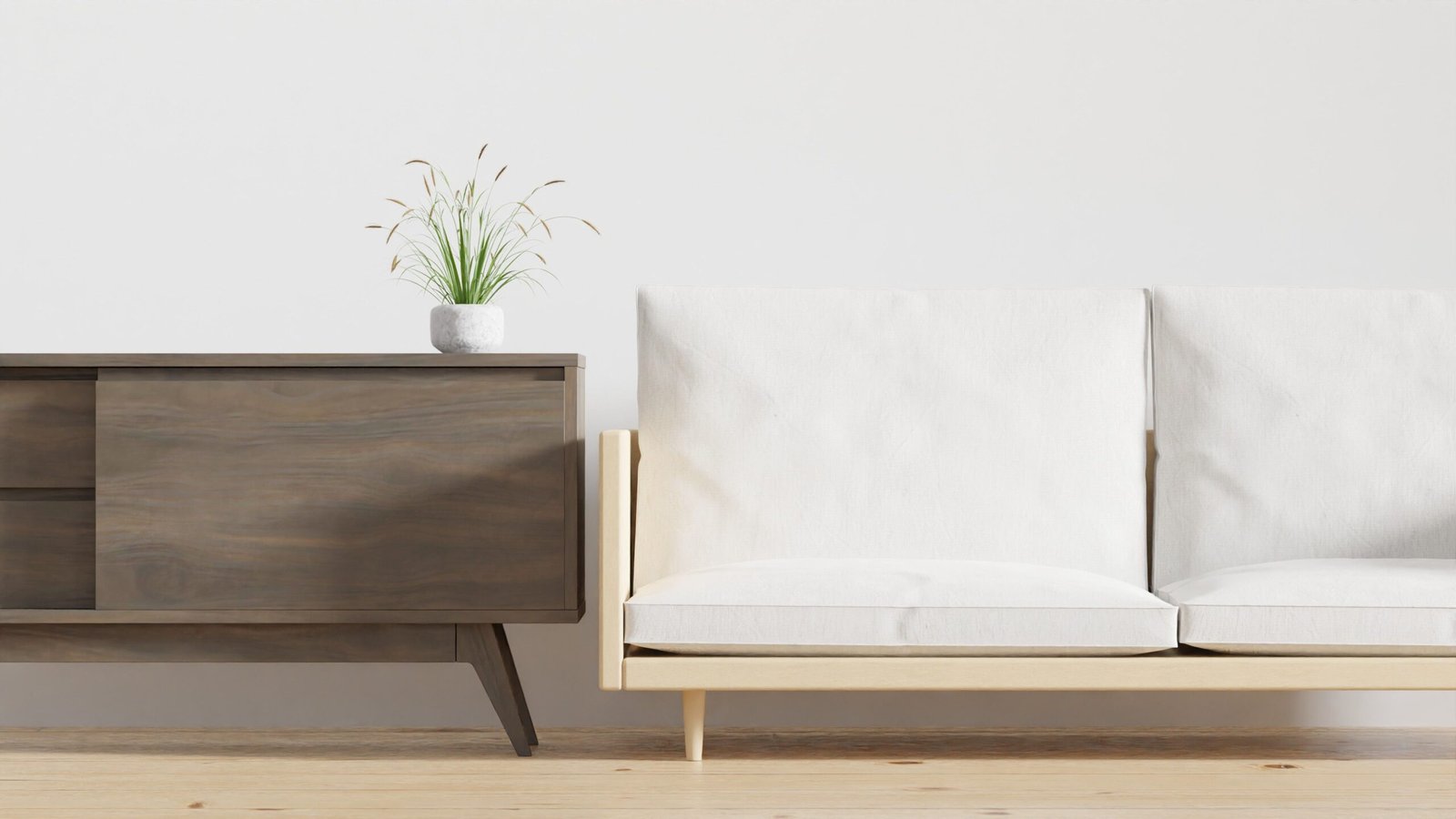
A console table behind a couch can make a floating sofa feel intentional while adding a useful surface for lamps, books and everyday objects. The easiest way to style one is to treat the table as a narrow visual layer behind the sofa: keep its scale compatible with the couch, use either a balanced pair of lamps or a high-low arrangement, and keep enough clearance for people to walk comfortably behind it.
There is no universal requirement that a console be exactly 1 or 2 inches below the sofa back. Use that as a starting proportion, then measure the actual sofa back, table and objects. The finished arrangement should look connected to the sofa without becoming a wall of decor.
The Dimensional Rules: Height, Length and Clearance
Before styling the tabletop, solve the furniture geometry. A beautiful arrangement will not work if the table blocks a walkway or is the wrong height for the sofa.
| Dimension | Useful Starting Point | What to Check |
|---|---|---|
| Table height | Around the sofa-back height, often slightly lower | Actual sofa back and sightline |
| Table length | Often about 2/3 to 3/4 of sofa width | Arms, end tables and visual balance |
| Table depth | 12–16 in is common for narrow sofa tables | Actual walking clearance and door swings |
| Lamp size | Choose a slim profile appropriate to the table | Shade, tabletop depth and nearby sightlines |
For example, an 84-inch sofa could pair well with a console around 56 to 63 inches long, but that is a proportion guideline rather than a fixed requirement. A smaller or larger table can work when the arms, surrounding furniture and room layout support it.
Likewise, 12 to 16 inches is a useful depth range for many sofa tables, but the correct depth is the one that leaves a comfortable route behind the couch. If the table sits beside a doorway or primary circulation path, measure that route rather than assuming a universal 36-inch clearance.
Formula 1: The Symmetrical Bookend
For a formal or orderly room, place a matching pair of slim lamps toward the outer portions of the console. In the center, use one low horizontal focal point such as a shallow tray, elongated bowl or small stack of books.
This creates a simple visual sequence: tall + low + tall. The lamps provide useful light and frame the sofa, while the center remains low enough to avoid making the furniture look crowded.
Keep the lamps proportionate to the table. A 24- to 28-inch lamp may work on some consoles, but there is no universal lamp height. Measure the tabletop, shade diameter and sofa back together. A lamp that is technically the “right” height can still look oversized if its shade dominates a narrow table.
Formula 2: The High-Low Asymmetrical Arrangement
For a more relaxed room, use one taller object on one side and several lower pieces toward the other side. A ceramic lamp or vase can provide the high point. Beside it, use a horizontal book stack, shallow bowl or small decorative box to create the transition.
The arrangement does not need to be perfectly balanced from left to right. Instead, balance visual weight: a darker object can offset a larger pale object, and a textured basket or bowl can counter a tall, narrow lamp.
If you lean artwork against the wall, make sure the frame is stable and cannot slide behind the sofa. Do not allow decor to project into a walking route.
What to Put on a Console Table Behind a Couch
A useful console does not need to carry a full collection of accessories. Choose a few pieces from different categories:
- Lighting: one or two slim lamps when electrical access allows.
- Height: a vase, branch arrangement or sculptural object.
- Low layer: books, a shallow tray, bowl or small box.
- Personal detail: one framed photograph or object that relates to the room.
- Practical storage: a small catchall for items that would otherwise land on the sofa table.
Pick two or three categories rather than trying to use all of them. The table should still have visible negative space.
How to Use the Lower Shelf
If the console has a lower shelf, it can add visual weight and storage without crowding the tabletop. Two or three baskets can hold blankets, small toys or extra pillows when their dimensions fit the shelf.
On an open-frame console without a shelf, a pair of small backless stools or ottomans can add seating. Leave enough room for them to be pulled out without colliding with the sofa or blocking circulation.
A lower shelf does not have to be completely filled. Leaving part of it open can look cleaner, especially when the tabletop already carries lamps and accessories.
Managing Lamp Cords Behind a Floating Sofa
Power is one of the practical issues that can determine whether lamps belong on a sofa table at all. If there is a suitable floor receptacle nearby, route the cord so it stays outside walking paths and is protected from foot traffic.
Small clips or cable sleeves can keep a cord close to a table leg, but do not run loose cords where people walk. Rechargeable lamps are another option when you want to avoid a visible power cable.
For permanent electrical work, use an appropriately installed receptacle and have electrical work completed according to applicable local requirements. Do not treat adhesive clips or decorative cable covers as a substitute for proper wiring.
Console Table Behind an L-Shaped Sectional
Yes, a console can work behind a sectional, but the table should follow the main sofa run rather than obstructing the open chaise side. Measure the exact footprint of the sectional and identify where people enter and exit the chaise.
A console behind the long back section can define the living zone in an open plan. If the sectional already creates a narrow passage, a deep table may make the route uncomfortable. In that case, a shallower table or no table at all may be the better spatial solution.
Common Styling Mistakes
1. Making the Table Taller Than the Sofa Without Checking the Sightline
A table that rises noticeably above the sofa can compete with the seating. A slightly lower table is a safe starting point, but the final decision should follow the actual sofa and room proportions.
2. Using a Console That Is Too Long
A console does not have to fill the entire sofa width. Leave visual breathing room around the ends and account for nearby end tables, arms and circulation.
3. Overloading a Shallow Table
Large lamp shades, tall vases and deep trays can make a 12-inch table feel crowded. Measure object footprints before buying accessories.
4. Ignoring the Walkway
Never choose the table first and assume the room will accommodate it. Measure from the back of the console to the nearest obstruction, including door swings and other furniture.
Frequently Asked Questions
Should a console table be the same length as the couch?
No. A console around two-thirds to three-quarters of the sofa width is a useful starting proportion, but the room and furniture around it matter more than a fixed percentage.
Can you put a console table behind an L-shaped sectional?
Yes. Place it behind the main sofa run when possible and keep the chaise entry and walking routes open. Measure the actual sectional footprint before choosing the table depth.
How tall should lamps be on a sofa table behind a couch?
There is no universal height. A 24- to 28-inch lamp can be a starting range for some consoles, but choose based on the table depth, sofa back, shade size and sightlines.
How much space should be behind a console table?
Measure the actual circulation path rather than relying on one universal number. A major walkway generally needs more usable space than a low-traffic gap, and door swings can increase the clearance required.
Final Takeaway
Styling a console table behind a couch starts with proportion and circulation. Choose a table that relates to the sofa without overwhelming it, then use either a symmetrical pair of lamps or a high-low arrangement to create visual structure. Keep the lower shelf useful but not overloaded, and make sure cords and furniture do not interfere with the path behind the sofa.
The best console-table arrangement is the one that looks finished while still allowing the room to function normally.