




How to Organize a Small Closet Without Buying More Storage

A small closet often looks like a storage problem when it is really a space-allocation problem.
Adding bins and hangers can help, but buying organizers before deciding what deserves the space usually creates a more expensive version of the same mess.
Feed Flow’s personal style guide is useful if you are still figuring out what you actually wear. This article focuses on making a small closet work better with the clothes you already have.
Empty the Closet First
Do not start by moving hangers around.
Take everything out, or work one section at a time. Group similar things together:
- Tops
- Bottoms
- Dresses
- Jackets
- Shoes
- Bags
- Accessories
- Seasonal items
- Clothing that needs repair
Grouping exposes duplication. Five black T-shirts look different when they are scattered than when they are sitting together.
Edit by Use, Not Guilt
Ask:
- Do I wear this?
- Does it fit my current life?
- Is it comfortable enough to reach for?
- Would I choose it again today?
You can keep sentimental or occasional pieces. They simply do not need to occupy the easiest space.
Create four groups:
Keep: useful and worn.
Repair: worth keeping but currently unusable.
Seasonal: useful later.
Release: no longer useful or wanted.
Create Simple Zones
Give each category a home.
Everyday: the clothes you reach for most.
Work or occasion: formal or special pieces.
Shoes and accessories: one defined area.
Seasonal: things you do not need right now.
Prime space should belong to the clothes you actually wear.
Use Vertical Space
Before buying a wider wardrobe, look upward.
A tall narrow shelf can hold folded clothes without consuming much floor space. A second hanging level can work for shorter clothing when the closet dimensions allow it.
Measure:
- Width
- Depth
- Height
- Door clearance
- Shelf clearance
- Walking space
A product that technically fits can still make a closet worse if it blocks another useful area.
Make the Hanging Rail Work
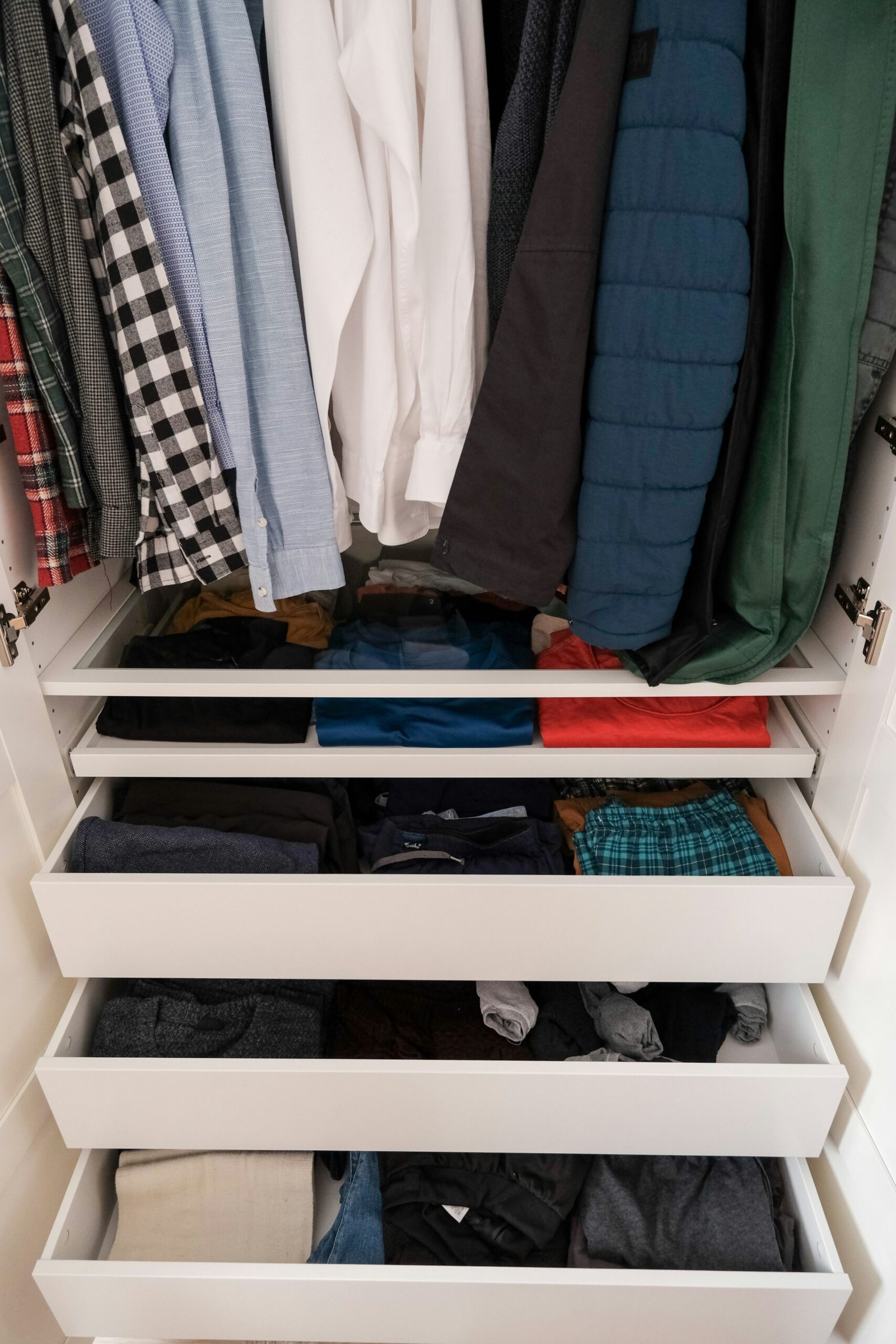
Use slim hangers that suit the garments. Then group clothing in a way that helps you get dressed.
You can organize by:
- Type
- Work versus casual
- Color
- Frequency of use
There is no need for a complicated color system if grouping by type works better.
Give Shoes One Home
Shoes scattered on the floor make a small closet feel full immediately.
Choose one zone:
- Bottom shelf
- Under-bed storage
- Narrow rack
- Closet floor
- Approved over-door organizer
Keep everyday shoes easiest to reach.
Use the Closet Door Carefully
The back of a door can hold lightweight accessories, bags, scarves, or similar items.
Use it for categories that are awkward elsewhere. Do not turn the door into another packed wall that makes the closet harder to use.
Move Seasonal Clothes Out of Prime Space
At the beginning of a new season:
- Remove clothes you are unlikely to wear for several months.
- Clean them according to their care instructions.
- Check for repairs.
- Store them in a labeled container or suitable secondary space.
- Bring the upcoming season forward.
The goal is to make today’s choices easier.
Do Not Buy Storage Until You Know the Problem
If you have too many shoes, a shelf may help.
If you have too many clothes, another shelf only hides the problem.
If clothes are difficult to see, changing the hanging or folding method may be more useful than buying furniture.
Recent organizing coverage has focused on small solutions for awkward items such as belts, hats, and accessories. The same principle applies: an organizer is useful when it solves a specific bottleneck.
Diagnose first. Buy second.
A 30-Minute Closet Reset
5 minutes: remove rubbish and items that belong elsewhere.
5 minutes: return clothes to the correct rail or shelf.
5 minutes: pair shoes.
5 minutes: straighten one category.
5 minutes: move seasonal pieces out of prime space.
5 minutes: remove three items you no longer need.
You do not need to reorganize the entire closet every week.
Keep the Closet Organized
Use a one-in, one-out rule for categories that regularly overflow.
Keep a small release or donation bag accessible. When you find something you no longer want, put it there immediately.
The point is to reduce the number of decisions you need to make during the next major closet reset.
Closet Organization vs. a Capsule Wardrobe
They are related but different.
A capsule wardrobe deliberately limits the number of pieces in the working wardrobe. Closet organization improves how the clothes you already own are stored and accessed.
You can have a large wardrobe and an organized closet.
Feed Flow’s capsule wardrobe guide goes deeper into reducing the number of pieces.
FAQ
How do I organize a small closet with too many clothes?
Group everything, separate daily, occasional, seasonal, repair, and release items, then give prime space to what you actually wear.
Are slim hangers worth it?
They can save rail space, but use hangers that suit the garment.
Should I organize clothes by color?
Only if it helps you. Category or frequency can be more practical.
What should go on the top shelf?
Use it for lighter, occasional, or seasonal items.
Final Take
A small closet does not need to hold more. It needs to make the right things easier to reach.
Edit before buying organizers, use vertical space carefully, keep categories together, and move seasonal pieces out of prime storage.