
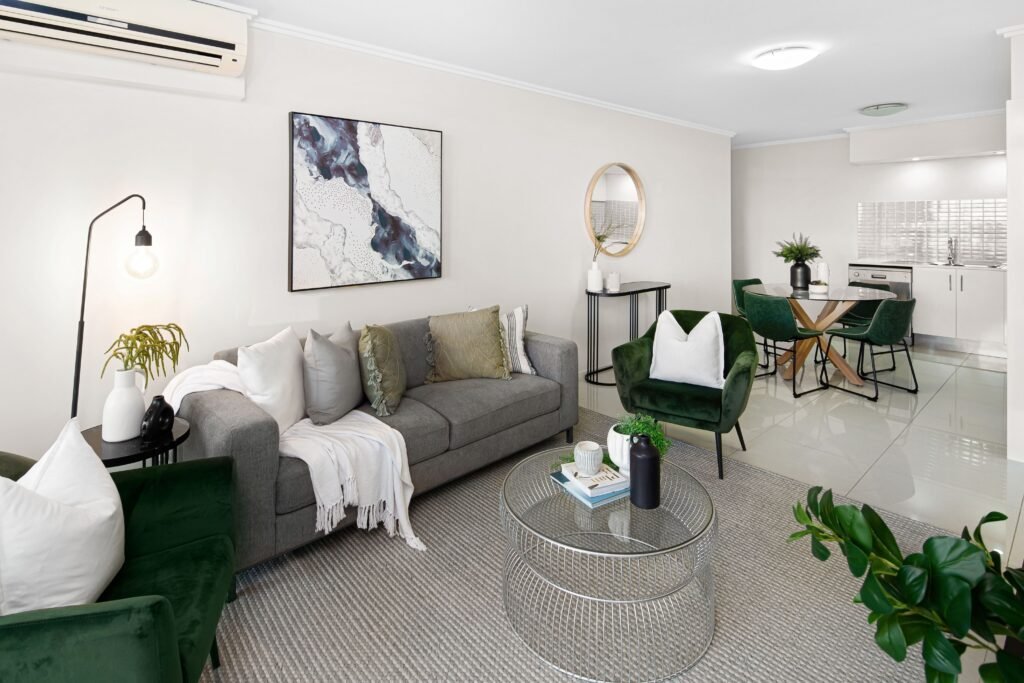
A rental can look polished without expensive furniture, permanent renovations, or a complete redesign. The key is to spend on changes you can take with you and improve the parts of the apartment that affect how the whole space feels: lighting, scale, textiles, clutter, hardware, and consistency.
Before making any change, check your lease and building rules. If a change involves drilling, painting, replacing fixtures, or modifying hardware, get permission when required.
Feed Flow’s Ultimate Small-Space Home Guide is useful for the layout side. This guide is about creating a more finished rental without treating it like a permanent remodel.
1. Start With Lighting
A room with one ceiling fixture can feel flat even when the furniture is good. Add smaller lamps at different heights where practical: a floor lamp beside a sofa, a table lamp on a console, or a bedside lamp.
Use bulbs with a color temperature that suits the room and follow the fixture manufacturer’s recommendations.
2. Make the Curtains Look Intentional
Short, poorly positioned curtains can make a room feel unfinished. If your lease allows you to change the setup, consider panels that hang close to the floor and a rod positioned appropriately for the window.
Choose simple curtains that repeat a color already present in the room.
3. Use a Large Enough Rug
A rug can visually connect furniture into one area. The mistake is choosing one so small that every piece of furniture looks isolated.
Measure the room and furniture before buying. Feed Flow’s 23 living room ideas that look expensive has more ideas for proportion and styling.
4. Replace Only the Most Visible Small Details
You do not need to replace everything. Pick a few highly visible details such as lampshades, cabinet pulls, a shower curtain, or frames.
For anything attached to the property, confirm the lease rules and keep original parts safely stored if you are permitted to replace them.
5. Repeat Your Metal Finishes
A rental can look chaotic when every room introduces a different metal finish. You do not need one metal throughout the apartment, but repeating one or two finishes creates visual continuity.
6. Buy Fewer Decorative Objects
A polished room rarely depends on dozens of tiny objects. A few larger, useful pieces often create a cleaner result: substantial artwork, a good lamp, a simple vase, tray, or mirror.
7. Use Textiles to Add Depth
Pillows, throws, curtains, bedding, and rugs can make inexpensive furniture feel more considered. Choose a small palette and mix textures rather than buying everything in the same fabric.
8. Make the Entryway Work
The first few feet inside an apartment affect the first impression. Keep shoes, bags, keys, and mail under control. A narrow console, approved wall hooks, tray, or small bench can create a clear landing zone.
9. Hide Everyday Clutter
Cords, remote controls, toiletries, packaging, and loose papers make even expensive furniture look messy. Use baskets, trays, cable management, and closed storage for things you need but do not want visually dominating the room.
10. Use One Consistent Color Story
You do not need a beige apartment. You need repetition. Choose a base neutral, a secondary tone, and one or two accents. Carry them through different rooms using textiles, artwork, and small objects.
Consistency is often more important than price.
11. Improve the Bedroom First
If the budget is limited, start with the room you use every day. A better duvet cover, coordinated pillows, a simple bedside lamp, and a clear nightstand can change the bedroom without buying new furniture.
Feed Flow’s 21 small bedroom ideas is a useful companion.
12. Use One Strong Mirror
A large mirror can make a rental feel brighter and more open when positioned to reflect light. Choose a frame that works with the apartment’s existing finishes.
13. Upgrade the Bathroom With Textiles
A coordinated shower curtain, towels, bath mat, soap dispenser, and storage tray can make a basic bathroom feel more deliberate. Keep counters clear. A clean surface often makes a bigger difference than another decorative item.
14. Add Greenery Carefully
A plant can add height, texture, and color. Choose something appropriate for the available light rather than buying a plant that will struggle. Artificial greenery can work too if it looks convincing and stays clean.
15. Create One Focal Point Per Room
If everything demands attention, nothing looks expensive. Choose one main focal point: artwork, a sofa, dining table, bed, or view. Keep surrounding pieces quieter.
16. Do Not Ignore Scale
One of the easiest ways to make a rental look cheap is to use furniture that is too small for the room. A tiny rug under a large sofa or miniature artwork on a wide wall can look accidental.
Measure before buying.
17. Keep Kitchen Counters Edited
Clear most appliances and packaging from the counter. Keep only the things you use often. If you need a coffee or cooking zone, group those items deliberately on one section rather than spreading them across the kitchen.
18. Use Removable Solutions Carefully
Renters can use removable hooks, temporary wallpaper, tension systems, and other non-permanent solutions when permitted and suitable for the surface.
Always follow the product instructions and your lease. A renter-friendly label does not guarantee that a product is safe for every wall or finish.
19. Spend on the Things You Touch Every Day
If you have $200 to improve the apartment, you do not need twenty $10 decorations. Consider putting more of the budget into a comfortable rug, bedding, lamp, curtains, or another item you use constantly.
The apartment will feel better because the improvements affect daily life, not just photographs.
A Simple Rental Upgrade Budget
With a limited budget, think in this order:
First: lighting and window treatments.
Second: textiles such as rugs and bedding.
Third: storage and clutter control.
Fourth: artwork, mirrors, and small decorative pieces.
Last: trend-driven accessories that do not solve a problem.
What Not to Do in a Rental
Do not drill without permission. Do not remove fixtures without understanding your lease. Do not buy furniture without measuring doors, elevators, hallways, and the room. And do not assume that an expensive-looking room requires expensive furniture.
A cohesive $300 improvement can look more intentional than a $1,000 collection of unrelated items.
Final Take
A rental looks more expensive when it feels intentional. Use better lighting, repeat a simple color story, choose the right scale, control clutter, and spend on pieces that affect everyday life.
The goal is not to make a rental look like a showroom. It is to make the space feel finished while keeping your changes practical, reversible, and within the rules of the property.
Further Reading
For more rental-friendly bedroom inspiration, IKEA’s small rented-studio bedroom guide shows how storage, color, and flexible furniture can work in a temporary space.
Related Feed Flow Guides
For more practical ideas, read this related Feed Flow guide and this companion article.
Further reading: https://www.apartmenttherapy.com/rental-friendly-decorating-ideas-36623684