
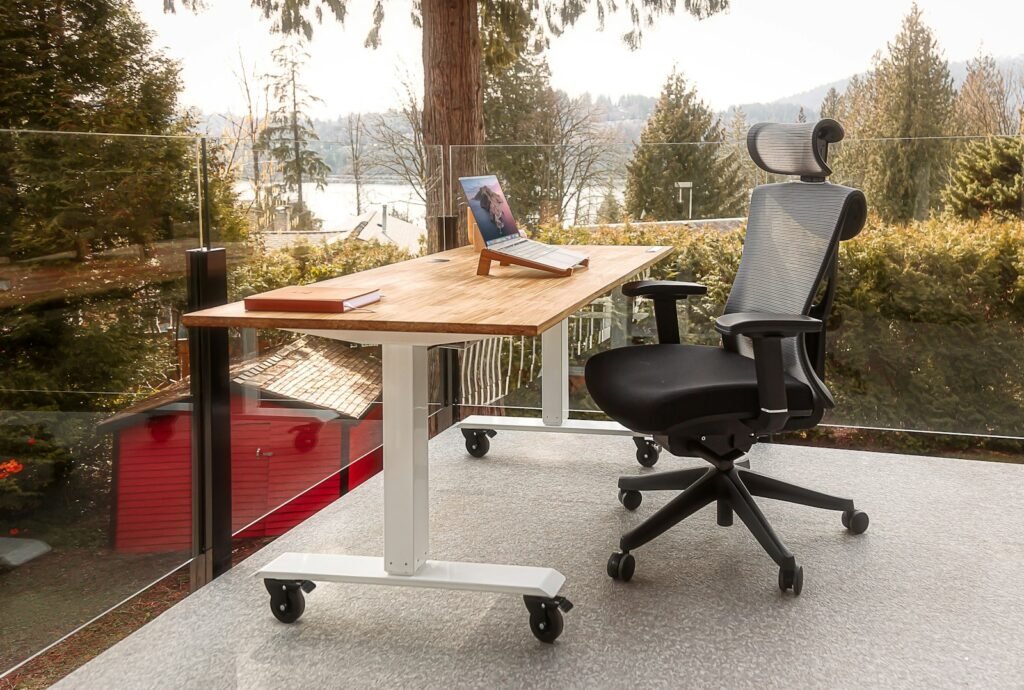
Leave at least 36 inches from the edge of the desk to the wall or furniture behind your chair. That is enough to pull the chair out, stand up and sit down. If people need to walk behind you while you are seated, plan for 44 to 60 inches.
The Short Answer
- Minimum: 36 in from desk edge to obstacle.
- Comfortable: 42 to 48 in.
- Walkway behind the chair: 44 to 60 in.
- Rolling chair on a hard floor or mat: lean toward the larger numbers.
Clearances at a Glance
| Space | Recommended |
|---|---|
| Desk edge to wall behind chair | 36 to 48 in |
| Desk edge to bed or sofa behind chair | 36 to 42 in |
| Walkway behind seated person | 44 to 60 in |
| Side clearance next to the chair | About 6 to 12 in |
| Desk to door swing | Keep the swing fully clear |
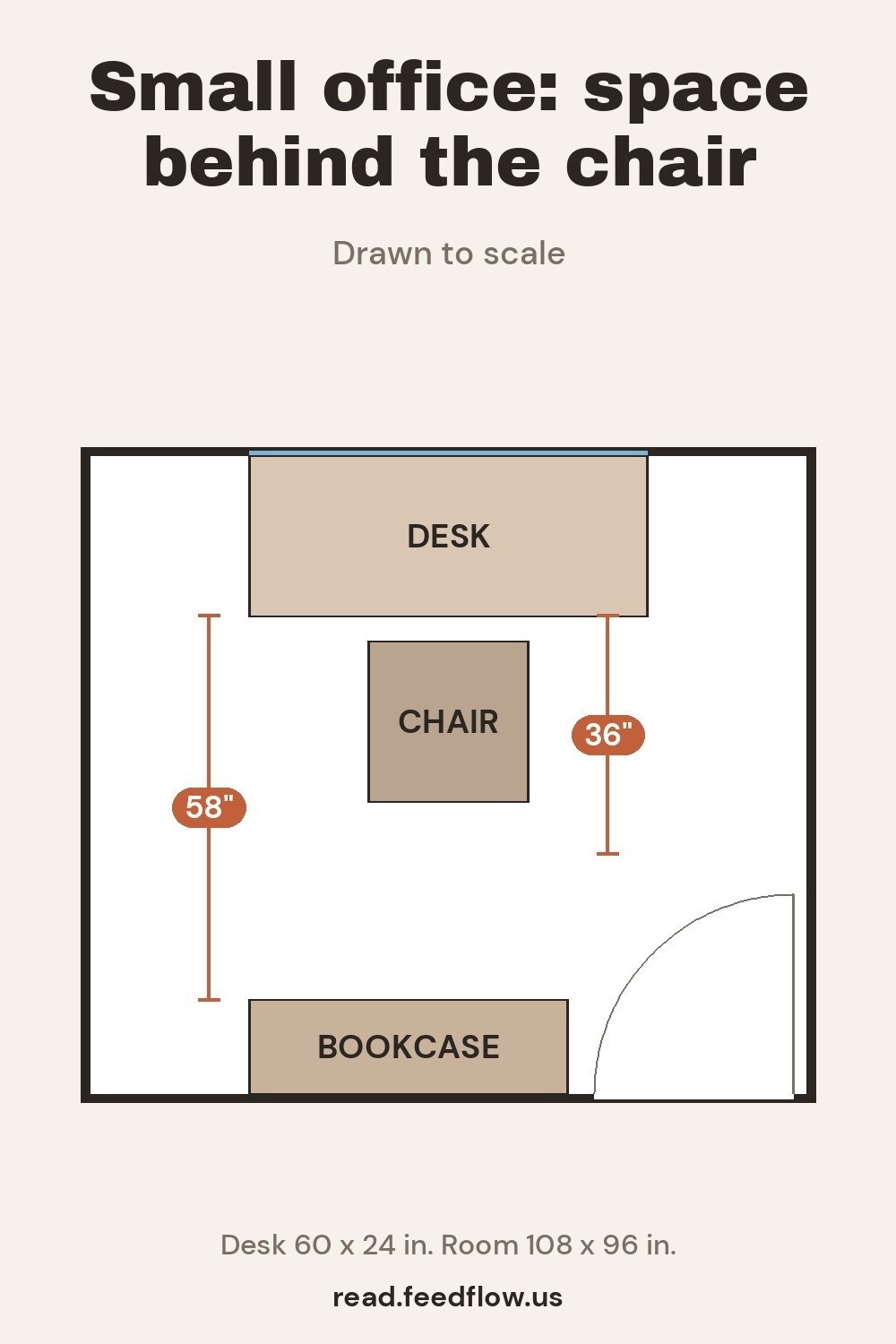
Small Rooms and Bedroom Desks
- Face the desk to a wall so the chair backs into open floor.
- Use a narrower desk: 20 to 24 inches deep instead of 30 gives you more room behind.
- Choose an armless chair that tucks fully under the desk.
- Check drawers and closets behind you; they need their own clearance.
For a full room plan, see a work-from-home setup for a 10×10 room. For bed clearances, see walkway around a bed.
Desk Size Basics
- Width: 40 to 48 inches for a laptop, 48 to 60 for a monitor and paperwork.
- Depth: 20 to 24 inches for laptops, 24 to 30 inches for monitors.
- Height: see standard desk height.
FAQ
Is 30 inches enough space behind a desk chair?
It is tight. You can sit, but standing up and pulling the chair back will feel cramped. Aim for 36 inches.
How much space do you need for a home office?
A desk 24 inches deep plus 36 inches behind it needs about 5 feet of room depth, more with a walkway.
Can a desk go at the foot of a bed?
Yes, if there are about 36 inches between the desk edge and the bed.
Feed Flow’s Take
Plan 36 inches behind the chair as your floor, 42 to 48 for comfort, and 44 to 60 if anyone walks past. A shallower desk is the easiest way to win back space.