





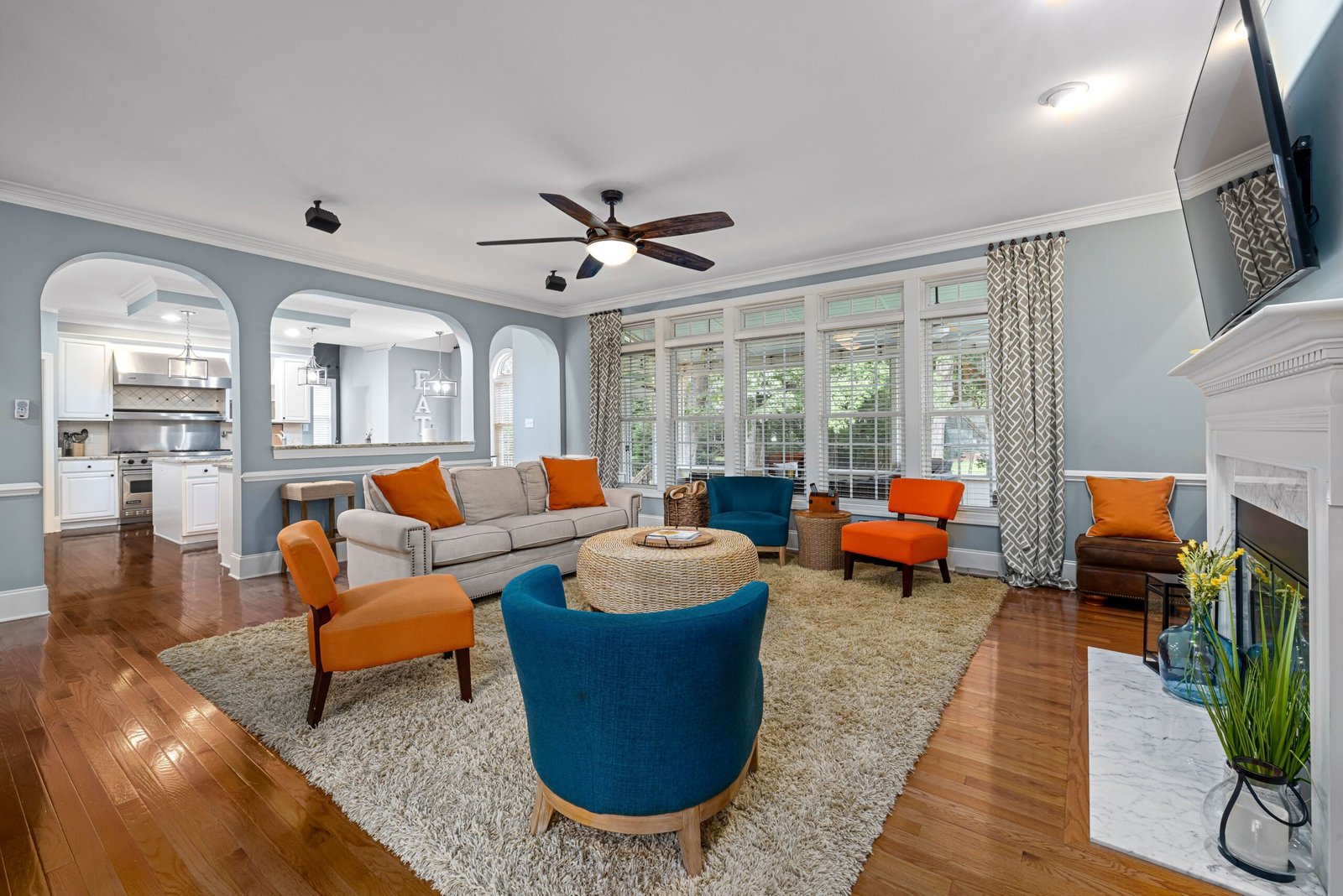
8×10 vs. 9×12 Rug: Which Size Does Your Living Room Actually Need?

Choosing between an 8×10 and 9×12 rug is less about finding a universal “best” size and more about matching the rug to your room, furniture footprint, and circulation paths. An 8×10 rug covers 80 square feet, while a 9×12 covers 108 square feet—35% more surface area. The larger rug can better anchor a floating sectional or several chairs, while the 8×10 is easier to fit around walls and walkways.
The Quick Answer: 8×10 vs. 9×12 Rug
Choose an 8×10 rug when your living room is compact or average-sized and the sofa’s front legs will sit on the rug. Choose a 9×12 when you have a larger seating group, an open floor plan, or enough floor space to place more of the furniture on the rug without blocking circulation.
Room dimensions can help, but they should not be treated as hard cutoffs. A 9×12 can work in a smaller room if the furniture arrangement and clearances allow it, while a large room may still need an 8×10 for a deliberately smaller seating zone.
8×10 vs. 9×12: The Dimension and Area Math
Start with the raw measurements:
- 8×10 rug: 8 × 10 feet = 80 square feet.
- 9×12 rug: 9 × 12 feet = 108 square feet.
- Difference: 28 additional square feet.
- Area increase: 35% more coverage than an 8×10.
The 9×12 adds one foot to one dimension and two feet to the other. That sounds modest on paper, but the extra 28 square feet can make a noticeable difference when you are trying to include a sectional, accent chairs and a coffee table on the same rug.
8×10 vs. 9×12 Rug Size Comparison
| Attribute | 8×10 Rug | 9×12 Rug |
|---|---|---|
| Dimensions | 96 × 120 in. | 108 × 144 in. |
| Surface area | 80 sq. ft. | 108 sq. ft. |
| Area difference | Baseline | 28 sq. ft. more / 35% larger |
| Typical furniture use | Front legs on rug | More furniture can fit fully on rug |
| Common pairing | Standard sofa, compact sectional | Large sectional, multiple chairs |
| Best planning use | Defined seating zone in a tighter room | Larger or floating seating zone |
When to Choose an 8×10 Rug
1. Your Furniture Works With a Front-Legs-On Layout
An 8×10 is often enough when the sofa sits against a wall and you want its front legs on the rug while the back legs remain on the floor. The rug can then connect the sofa with the coffee table and nearby seating without covering the entire room.
2. You Need More Bare Floor Around the Seating Area
If doors, windows, built-ins or a media console make the perimeter complicated, the smaller footprint of an 8×10 can be easier to place. Measure the actual usable floor rather than choosing based only on the room’s total dimensions.
3. Your Seating Group Is Compact
A standard sofa and coffee table may not need the coverage of a 9×12. If accent chairs are positioned outside the main seating zone or the room is intentionally divided into several areas, an 8×10 can define the living area without visually taking over the floor.
When to Upgrade to a 9×12 Rug
1. You Have an Open-Concept Floor Plan
In an open room, a rug can act as a visual boundary for the living area. A 9×12 provides more coverage, making it easier to keep the sofa, coffee table and chairs within one defined zone while leaving the surrounding dining or kitchen area separate.
2. You Have a Large Sectional or Multiple Chairs
A large L-shaped sectional has both a long and deep footprint. Add two accent chairs and the seating group can quickly outgrow an 8×10. A 9×12 gives you more flexibility to place the major furniture pieces on the same surface.
3. You Want an All-Legs-On Layout
For a floating seating arrangement, putting the complete sofa or sectional on the rug can create a clearly defined island. A 9×12 makes this easier because it provides more rug around the furniture, although the exact fit still depends on the furniture dimensions.
What Size Room Needs a 9×12 Rug?
There is no single room size that “needs” a 9×12 rug. Instead, measure the usable floor around the furniture. For example, a 9×12 rug is 108 inches wide and 144 inches long, so placing it in a 12×14-foot room leaves only 18 inches on the 12-foot dimension before furniture and other obstacles are considered.
That does not automatically make the rug wrong. It simply means you need to check doors, walkways, furniture depth and wall clearances before buying it. In a larger room, the same rug may leave a much more generous perimeter.
The Painter’s Tape Test
When you are between sizes, tape both footprints on the floor before ordering.
- Mark the 8×10: Create a rectangle measuring 96 × 120 inches.
- Mark the 9×12: Create a second rectangle measuring 108 × 144 inches, using the same reference point.
- Place your furniture: Check where sofa legs, chairs and the coffee table land relative to each outline.
- Walk the room: Open doors, walk through the normal routes and check that the larger outline does not create a pinch point.
If the 9×12 runs into a doorway, blocks a cabinet, or makes the main walking route awkward, the 8×10 may be the more practical choice. If the 8×10 leaves important seating pieces completely disconnected from the rug, size up.
How Furniture Placement Changes the Decision
Standard Sofa
With a sofa against a wall, an 8×10 often works well with the front legs on the rug. Center the rug according to the seating group rather than automatically centering it on the room.
Sectional With Chaise
A chaise creates a deeper footprint, so an 8×10 may feel tight depending on the sectional’s dimensions. A 9×12 provides more depth and width for the sectional, coffee table and additional chairs. For a detailed sectional-specific guide, see What Size Rug Under a Sectional With Chaise? Layout & Sizing Guide.
84-Inch Sofa
An 84-inch sofa pairs naturally with both sizes depending on the room. An 8×10 gives 18 inches beyond each side when its 10-foot side runs across the sofa. A 9×12 gives even more lateral coverage and is useful when the seating group extends beyond the sofa itself. See What Size Rug for an 84-Inch Sofa? The Complete Living Room Sizing Guide for the detailed calculation.
How Much Bare Floor Should You Leave Around the Rug?
There is no universal required border between a rug and the walls. A visible floor perimeter can help the rug look intentional, but the appropriate amount depends on the room and furniture.
Rather than forcing a 10- to 18-inch rule, use the room’s architecture as the test. Keep doors, vents, built-ins and main circulation clear. In some rooms the rug can sit relatively close to a wall; in others, a larger perimeter makes the seating zone feel better proportioned.
Cost and Maintenance: What Changes When You Size Up?
A 9×12 uses 35% more rug area than an 8×10, so it will generally require more material. The actual price difference varies widely by fiber, construction, brand, pattern and retailer, so do not assume a fixed percentage increase when budgeting.
A larger rug can also be more cumbersome to roll, move and clean. Check the manufacturer’s care instructions and the rug’s actual weight before choosing a thick or high-pile 9×12 for a room where you expect to move it frequently.
Frequently Asked Questions
Is an 8×10 or 9×12 better for a living room?
Neither size is universally better. An 8×10 is easier to fit in a tighter seating zone, while a 9×12 provides more coverage for larger furniture groups and open layouts. Choose based on your furniture footprint and circulation.
Can a 9×12 rug make a small living room look bigger?
It can create a more continuous visual plane, but only if the larger rug fits comfortably. If it crowds walls, doors or walkways, the room can feel more constrained rather than more spacious.
What size rug pad do I need for an 8×10 or 9×12 rug?
A common approach is to use a rug pad slightly smaller than the rug so it stays concealed. For an 8×10, a pad around 7’8" × 9’8" follows a two-inch reduction on every side. For a 9×12, the equivalent would be about 8’8" × 11’8". Always follow the rug and pad manufacturer’s instructions.
How far should a rug be from the TV stand?
There is no universal 12- to 18-inch requirement. Position the rug so the media console is stable, the main walking route remains clear, and the rug does not create an awkward trip edge at the front of the furniture. If the console is intended to sit partly on the rug, plan that relationship as part of the whole furniture layout.
Final Takeaway
The choice between an 8×10 and 9×12 rug comes down to coverage versus available floor space. An 8×10 is often the practical choice for a sofa against a wall and a compact seating group. A 9×12 earns its extra coverage when you have a large sectional, multiple chairs, or an open room where the rug needs to define a larger seating island.
Before buying, tape both sizes on the floor and place the furniture inside the outlines. That simple test tells you more than a fixed room-size rule because it accounts for the actual shape of your room, furniture and walkways.
For more living-room planning, see How to Arrange Furniture in a Small Living Room Without Making It Feel Cramped and Ultimate Small-Space Home Guide.