
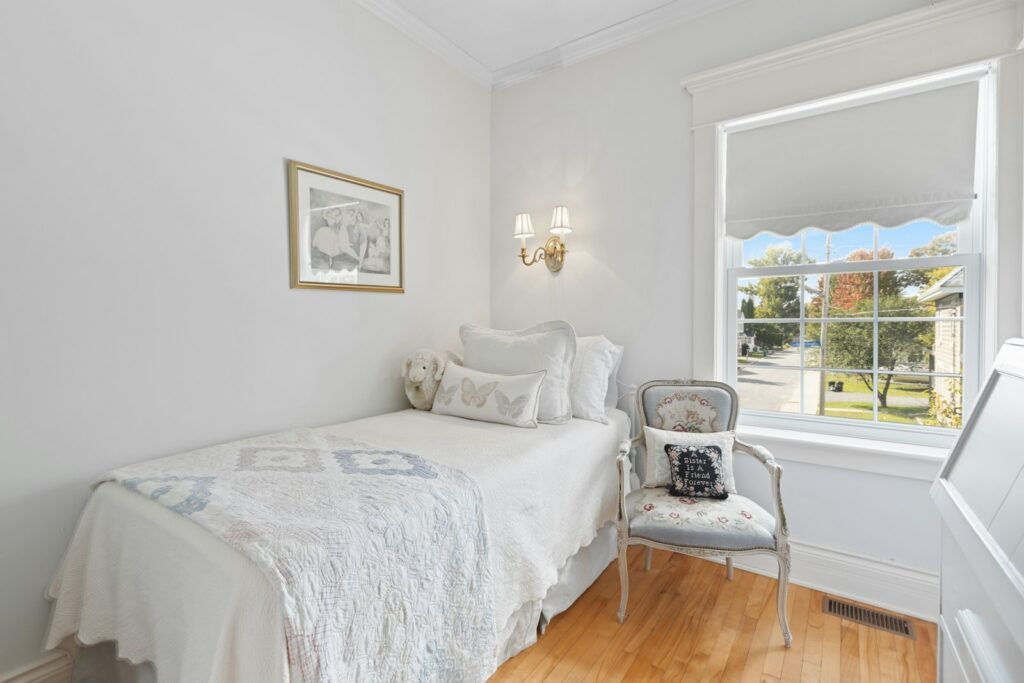
For most bedrooms, the best spot is headboard against a wall, bed centered, with walking space on both sides. Pushing the bed fully into a corner or against a side wall makes sense in small rooms, kids’ rooms and single-sleeper rooms where floor space matters more than two-sided access.
The right choice comes down to three things: how many people sleep in the bed, how wide the room is, and what else the room has to hold.
The Short Answer
- Couples: center the bed on a wall so each person has their own side.
- One sleeper in a small room: push the bed against a side wall to free up a large open area.
- Large rooms: a bed floating away from the walls can work, but it needs a lot of space.
Bed Against a Wall: Pros and Cons
Placing one long side of the bed against a wall, usually in a corner, is the most space-efficient layout.
Pros
- Frees up a full walkway’s worth of floor, often 24 to 30 inches or more.
- Leaves room for a desk, dresser or play area.
- Feels cozy and enclosed, which many kids and some adults like.
Cons
- Only one person can get in and out easily.
- Making the bed and changing sheets is harder.
- Exterior walls can feel cold, and bedding can rub marks onto the paint.
Bed Centered on a Wall: Pros and Cons
This is the classic layout: headboard on the wall, open sides, nightstands left and right.
Pros
- Equal access for two sleepers.
- Symmetry looks balanced and calm.
- Easier to make the bed and clean around it.
Cons
- Needs more width: bed width plus about 48 inches for two comfortable walkways.
- Leftover floor is split into narrow strips instead of one usable area.
Floating in the Middle of the Room
A bed with no wall behind the headboard can look striking in a large room, especially with a console or desk behind it. It needs a sturdy, finished headboard, at least 30 to 36 inches of walking space all around, and a plan for power cords, which otherwise end up crossing the floor. In most small and average bedrooms, it wastes space.
How Much Room Each Option Needs
| Bed | Centered on wall (24 in each side) | Against a side wall (one 24 in walkway) |
|---|---|---|
| Twin (38 in) | 86 in wide (about 7.2 ft) | 62 in wide (about 5.2 ft) |
| Full (54 in) | 102 in wide (8.5 ft) | 78 in wide (6.5 ft) |
| Queen (60 in) | 108 in wide (9 ft) | 84 in wide (7 ft) |
| King (76 in) | 124 in wide (about 10.3 ft) | 100 in wide (about 8.3 ft) |
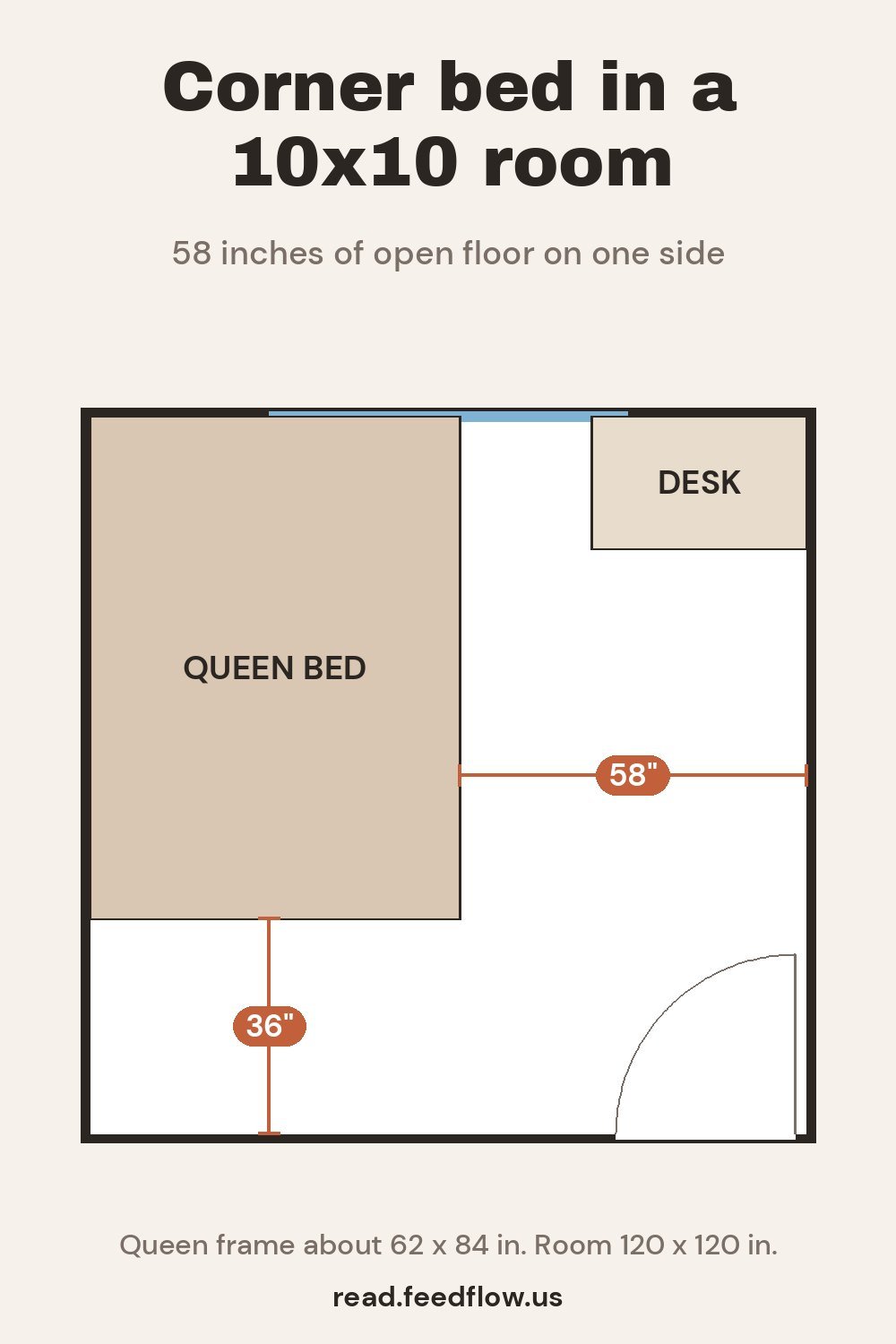
These are minimums for the bed alone. Add frame width and nightstands for a real plan. In a 10×10 room, for example, a queen pushed into a corner leaves about 58 inches of open floor on one side, compared with about 30 inches per side when it is centered.
How to Decide
- Count sleepers. Two adults almost always do better with a centered bed.
- Measure the wall. If the wall is narrower than bed width plus 48 inches, consider the corner.
- Check the door and closet. The bed should not block either one.
- Think about the view. Many people like to see the door from bed, and morning light from a window.
- Tape it out on the floor before moving heavy furniture.
If you are fitting two beds into one room, see Feed Flow’s twin beds in a small room layouts. For general walkway numbers, see the walkway around a bed guide.
FAQ
Is it bad to have your bed against the wall?
No. It is a practical choice for small rooms and single sleepers. Leave a small gap of an inch or two so bedding does not rub the wall, and avoid cold exterior walls if you can.
Should a bed be centered on the wall?
For couples and rooms wide enough to allow it, yes. Centering looks balanced and gives each person easy access.
Is it OK to put a bed in a corner?
Yes, especially in kids’ rooms, guest rooms and studios. It creates one larger open area instead of two narrow strips.
Feed Flow’s Take
Start with the centered layout if two people share the bed and the room is at least as wide as the bed plus 48 inches. If you sleep alone or the room is narrow, the corner is not a compromise. It is often the smarter use of space.