
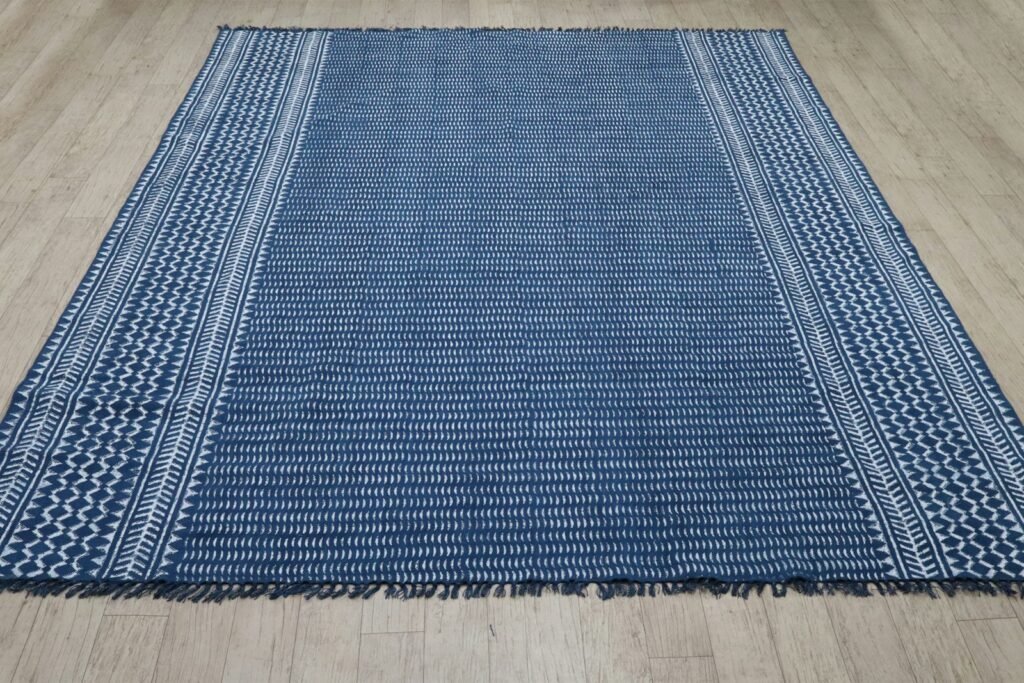
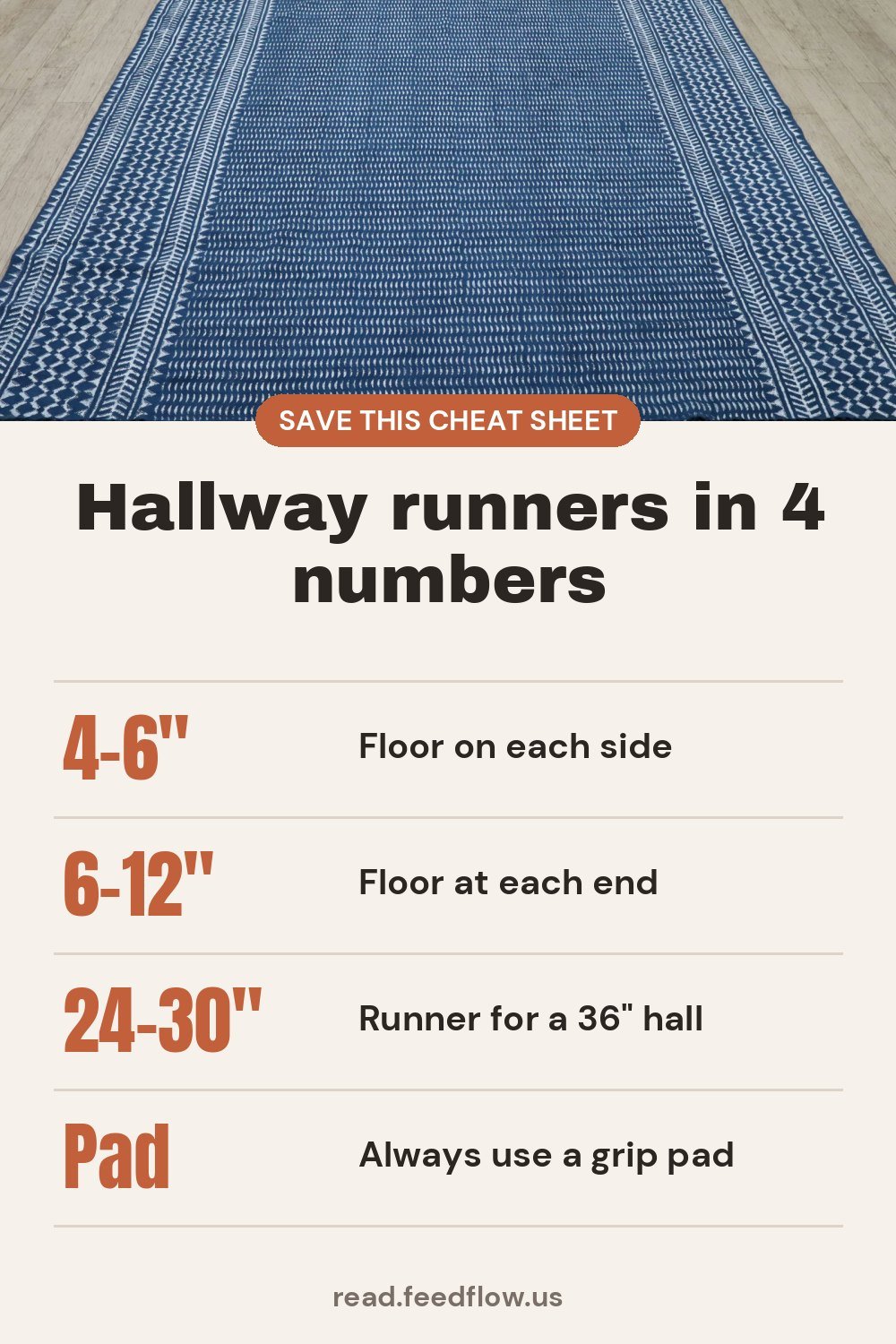
A hallway runner should leave about 4 to 6 inches of floor on each side, so it looks intentional and does not curl against the baseboards. In a typical 36-inch hallway, that means a runner about 24 to 30 inches wide. Lengthwise, leave roughly 6 to 12 inches of floor at each end.
The Short Answer
- Width: hallway width minus 8 to 12 inches.
- Length: hallway length minus 12 to 24 inches.
- Center it side to side.
Runner Width by Hallway Width
| Hallway width | Runner width | Common size |
|---|---|---|
| 32 to 36 in | 24 to 28 in | 2 ft or 2 ft 3 in |
| 36 to 42 in | 28 to 32 in | 2 ft 6 in |
| 42 to 48 in | 32 to 38 in | 2 ft 8 in to 3 ft |
| 48 in and wider | 36 in or more | 3 ft or a custom runner |
How Long the Runner Should Be
Subtract 12 to 24 inches from the hall length and choose the closest standard size below that number, such as 8, 10, 12 or 14 feet. In very long halls, two runners with a small gap can work, or a custom length. The same idea of a floor border applies to room rugs; see how far a rug should be from the wall.
Doors, Vents and Safety
- Door swings: make sure doors clear the runner, especially with thicker pile.
- Floor vents: leave them uncovered.
- Rug pad: use a non-slip pad cut slightly smaller than the runner.
- Low pile: safer for a busy walkway and easier to vacuum.
- Stairs nearby: keep the runner end well clear of the top step.
FAQ
How wide should a runner be for a 36-inch hallway?
About 24 to 28 inches, leaving 4 to 6 inches of floor on each side.
Should a runner go wall to wall in a hallway?
No. A border of visible floor looks better and keeps the edges from curling up the walls.
How much floor should show at the ends?
About 6 to 12 inches at each end.
Feed Flow’s Take
Subtract 8 to 12 inches from the hall width and 12 to 24 inches from its length, then buy the nearest standard runner below those numbers. Add a grip pad and keep the doors clear.