
How to Clean a Mattress at Home: A Safe Step-by-Step Guide
A mattress collects dust, sweat, skin flakes, spills and other debris over time. Cleaning it does not require flooding the surface with water. Excess moisture can make a mattress difficult to dry.
The safest general approach is to follow the manufacturer’s care instructions, remove the bedding, vacuum the surface and use small amounts of appropriate cleaning solution only where needed.
Feed Flow’s weekly cleaning schedule can help turn mattress care into a manageable routine.
Check the Mattress Care Instructions
Mattresses use different materials, including foam, springs, latex and layered constructions. Their care instructions are not identical.
Check the sewn-in label and manufacturer guidance before applying any cleaner. If the label says spot-clean only, do not turn the session into a full wet wash.
Strip and Wash the Bedding
Remove sheets, pillowcases, mattress protectors and other removable bedding. Wash them according to their care labels.
The protector is part of the cleaning system. Wash it before putting it back on the mattress.
Feed Flow’s bed-clearance guide explains why keeping circulation around the bed usable matters for the room.
Vacuum the Mattress
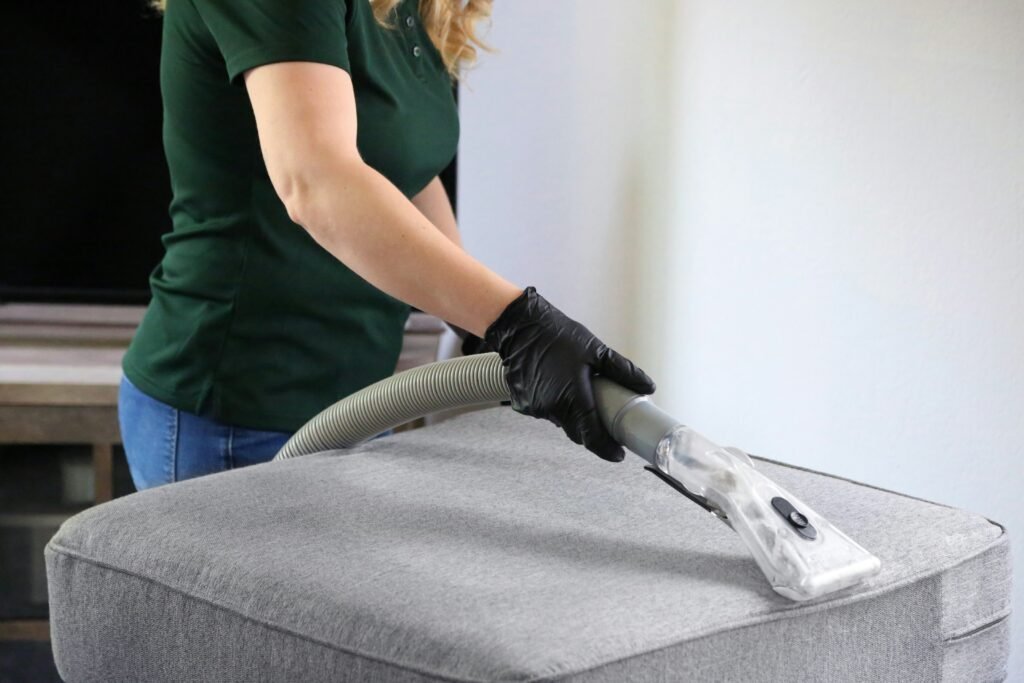
Use an upholstery attachment or another suitable vacuum head and work slowly across the surface. Vacuum the top, sides and seams where the machine can safely reach.
Do not press a hard vacuum head aggressively into delicate fabric or foam. The goal is to remove loose debris, not damage the cover.
Treat Stains Without Soaking It
For a small fresh spill, blot rather than scrub. Scrubbing can push liquid deeper and spread the stain.
Use a small amount of an appropriate cleaner on a cloth rather than pouring liquid directly onto the mattress. Work from the outside of a stain toward the center, then blot with a clean cloth.
For biological stains, pet accidents or difficult contamination, follow the manufacturer’s instructions and use a cleaner intended for the material. Heavy contamination may require professional cleaning or replacement.
Deal With Odors Carefully
If the mattress is clean but smells stale, ventilation is a good first step. Remove the bedding and allow the room to circulate air while keeping the mattress dry.
Some people use baking soda as a dry deodorizing step. If you do, use a light layer and vacuum it thoroughly afterward. Never mix household cleaners.
Let the Mattress Dry Completely
Drying is one of the most important parts of mattress cleaning. After spot cleaning, give the mattress enough time to dry before covering it again.
Increase ventilation and avoid trapping moisture under sheets or a protector. A surface that feels dry does not always mean the inside is dry.
Prevent Future Buildup
- Use a washable mattress protector that fits correctly.
- Wash bedding on a regular schedule appropriate to your household.
- Address spills as soon as practical.
- Keep food and drinks away from the bed when possible.
- Vacuum the mattress periodically.
- Rotate or flip it only if the manufacturer says it is designed for that.
What Not to Do
- Do not soak the mattress.
- Do not use bleach unless the manufacturer allows it.
- Do not mix cleaning chemicals.
- Do not scrub aggressively.
- Do not cover a damp mattress.
- Do not ignore serious contamination. Some situations need professional cleaning or replacement.
Feed Flow’s Take
Mattress cleaning works best as a low-moisture maintenance task. Follow the care label, vacuum thoroughly, treat stains locally, ventilate the mattress and let it dry completely before making the bed.
For a broader home-maintenance routine, use Feed Flow’s weekly cleaning schedule. If you are reorganizing the bedroom at the same time, see how to create a cozy bedroom without making it look cluttered.