

Yes, you can put a bed under a window, and in many small bedrooms it is the only wall long enough for the headboard. It just takes a little planning: the right headboard height, a window treatment you can reach easily, and attention to drafts, light and safety.
The Short Answer
A bed under a window works well when the window is centered on the wall, the headboard sits below the sill, and the window stays easy to open. It works poorly when the window is drafty, leaks, faces a noisy street, or is the room’s emergency exit and the bed would make it hard to reach.
Why It Can Work
- It frees up wall space elsewhere for a dresser, desk or closet access.
- The window becomes a natural focal point, like a built-in headboard.
- Morning light can help some people wake up more easily.
- It can be the only layout that fits in rooms with doors and closets on the other walls.
The Downsides
- Drafts and temperature swings from older or single-pane windows.
- Early light and street noise right above your head.
- Condensation can dampen bedding pushed against the glass or sill.
- Harder to reach the window, blinds and latches.
- Nowhere to lean when reading in bed unless the headboard is tall enough.
How to Make It Work
- Center the bed on the window when possible. An off-center window above a bed looks accidental.
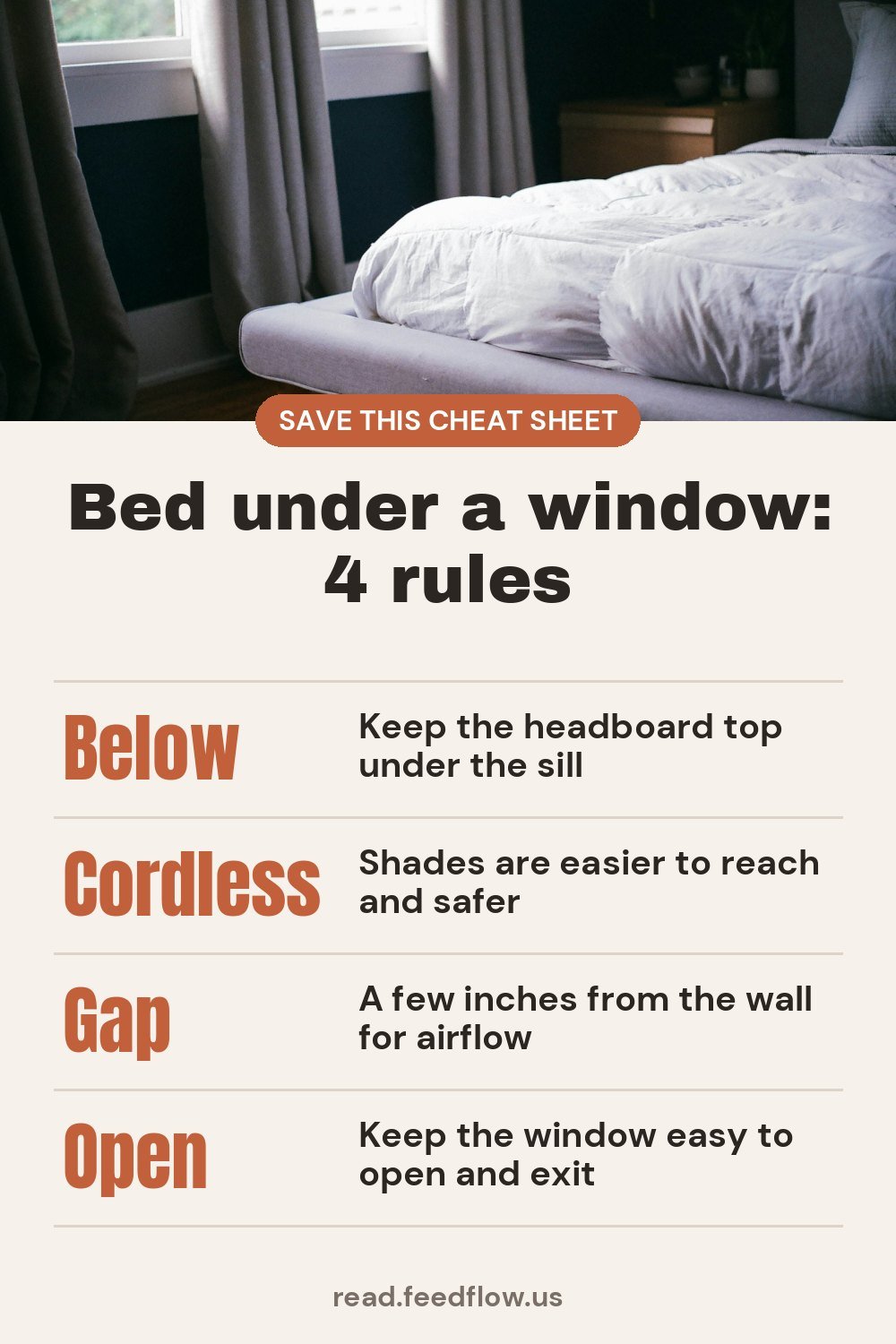
- Leave a small gap of a few inches between the headboard and the wall so air can circulate and curtains can hang freely.
- Seal drafts with weatherstripping or a thermal curtain before you move the bed.
- Keep the window usable. You should be able to open it, and in an emergency, get out through it. Building codes generally require an escape-sized window in bedrooms, so do not block it with heavy furniture.
- Frame it with matching nightstands and lamps or sconces on each side to make the layout look intentional.
Choosing a Headboard
The simplest rule: keep the top of the headboard just below the window sill, or leave a clear gap of several inches between them. A headboard that cuts across the glass looks awkward from inside and outside.
- Low sills (under about 30 inches): use a low platform bed, or skip the headboard and use a bolster pillow.
- Standard sills (about 36 to 42 inches): a low to medium headboard usually fits underneath.
- High sills (over 44 inches): most standard headboards fit with room to spare.
Measure from the floor to the sill, then compare it with the headboard’s listed height. Feed Flow’s guide to headboard heights has typical sizes.
Window Treatments
- Cordless shades or blinds are easier to reach over a bed and safer around children.
- Blackout or room-darkening liners stop early light from waking you.
- Curtains hung high and wide make the window and room look larger. See how high to hang curtain rods.
- Avoid long panels pooling on the pillows; they collect dust and get in the way.
FAQ
Is it bad feng shui to put a bed under a window?
Traditional feng shui prefers a solid wall behind the bed for a sense of support. If you follow it, a solid headboard and heavy curtains are the usual compromise.
How far should a bed be from a window?
A few inches between the headboard and the wall is usually enough for curtains and airflow. Keep bedding off the glass and sill to avoid condensation.
Can you put a bed under a window with a radiator?
Leave clear space in front of radiators and heaters so they work properly and bedding never touches them. Follow the manufacturer’s clearance guidance.
Feed Flow’s Take
A bed under a window is a perfectly good layout, especially in small rooms. Measure the sill, pick a headboard that sits below it, deal with drafts and light first, and keep the window easy to open. Done that way, the window frames the bed instead of fighting it.