
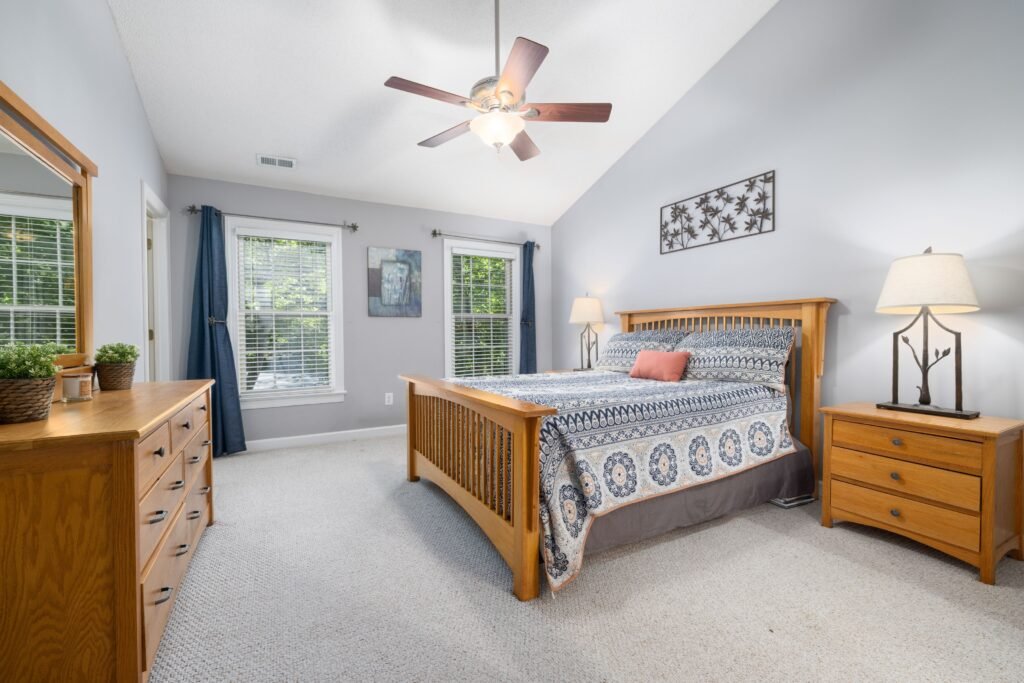
A 10×12 bedroom gives you 120 square feet, so a standard king can fit, but the bed will dominate the room. The mattress is 76 by 80 inches, and a typical frame can extend the footprint to roughly 78 to 82 by 84 to 86 inches. The trade-off is circulation: you can get useful side or foot clearance, but fitting a large dresser and deep nightstands at the same time is difficult.
If you are asking will a king bed fit in a 10 by 12 room, the short answer is yes. The better question is which direction you should place it.
The Math: Standard King Dimensions vs. a 10×12 Room Size
Start with the dimensions of the mattress, then measure the actual frame you plan to buy. A standard U.S. king mattress measures 76 inches wide by 80 inches long. California king is different at 72 by 84 inches. Exact mattress dimensions can vary slightly by manufacturer, so the manufacturer’s measurements should win when you are planning a tight room. Sleep Foundation lists the standard king at 76 by 80 inches. citeturn0search0
- 10 feet = 120 inches
- 12 feet = 144 inches
- Room area = 120 square feet
- King mattress = 76 x 80 inches
- Typical planning footprint with frame = about 78–82 x 84–86 inches
The mattress itself covers about 42.2 square feet. That is about 35% of a 120-square-foot room. A larger frame can push the occupied footprint closer to 41% of the room’s floor area, which is why the room can feel much tighter than the mattress dimensions suggest.
King Bed in 10×12 Bedroom: Clearance Comparison
| Measurement Point | Headboard on 12-Ft Wall | Headboard on 10-Ft Wall | Planning Target |
|---|---|---|---|
| Side clearance, each side | About 33 in. | About 21 in. | 24 in. minimum; 30–36 in. more comfortable |
| Foot clearance | About 34–36 in. | About 58–60 in. | About 36 in. for a comfortable main path |
| Best use of remaining space | Nightstands and open circulation | Dresser or deeper storage at the foot | Keep the main route clear |
These numbers assume a frame around 78 inches wide and 84–86 inches long. A bulky headboard or extended footboard can change them by several inches. Sleep Foundation suggests about 24 inches of space around each side of a bed as a useful planning point, while a 30–36-inch path gives you more comfortable everyday circulation. citeturn0search5
The Two Best Layouts for a King Bed in a 10×12 Room
Layout 1: Headboard Centered on the 12-Foot Wall
This is usually the cleanest king bed in 10×12 bedroom layout when the room is mainly for sleeping. Put the headboard on the 144-inch wall. With a 78-inch-wide frame, you have about 33 inches on each side.
That extra side space makes a big difference. Two compact nightstands can fit without forcing the mattress against a wall, and the bed looks centered when you enter the room.
The catch is the foot of the bed. If your frame is 84–86 inches long, you have roughly 34–36 inches between the foot and the opposite 10-foot wall. That is enough for a walking route, but it leaves little room for deep furniture.
A dresser that is 18 inches deep plus roughly 16 inches of drawer extension would consume about 34 inches of that space when the drawers are open. In other words, a standard dresser at the foot can turn a usable walkway into a bottleneck.
Best for: two people who want comfortable side access, two nightstands, and a bedroom that does not need a large piece of furniture opposite the bed.
Layout 2: Headboard Centered on the 10-Foot Wall
Turn the bed so the headboard sits on the 120-inch wall. A 78-inch frame leaves about 21 inches on either side, while the longer dimension of the room gives you roughly 58–60 inches at the foot.
This arrangement creates a much more generous front zone. It can work if the room needs a dresser, vanity, hamper, or access to a closet on the opposite side.
The downside is obvious when you walk around the bed. Twenty-one inches is narrower than the 24-inch side clearance often used as a practical minimum, and it is much tighter than a 30–36-inch comfortable walkway. It can also make nightstands difficult unless they are narrow, floating, or omitted.
Best for: rooms where the foot-of-bed area has a real job, especially when storage is more important than wide bedside circulation.
4 Critical Spatial Clearance Checks Before Buying
1. Door Swing Paths
Do not measure only the empty rectangle of the bedroom. Open the bedroom door, closet door, and any bathroom door fully. A door leaf can occupy a surprising amount of floor space, and a nightstand placed in its swing path can make an otherwise workable layout fail.
Mark the door’s actual sweep on the floor with painter’s tape. Then mark the proposed bed footprint. You will see the conflict before delivery day.
2. Closet Access
Closet doors matter more in a 10×12 room than they do in a large bedroom. Sliding doors are usually easier to work around because they do not require a clear swing zone in front of the opening. Hinged doors need that space kept open.
If your closet has double hinged doors, measure the fully opened position. A king bed may fit on paper while blocking one of the doors in daily use.
3. Windows and HVAC Vents
A wide king headboard can cover a low window sill, radiator, return-air grille, or supply vent. Check the wall before choosing the bed orientation. Do not assume a piece of furniture can safely cover a vent just because there is enough floor space.
4. Dresser Clearance
Measure a dresser as an active piece of furniture, not a rectangle. Add its drawer pull-out depth to the dresser body depth. An 18-inch dresser with 16 inches of open drawer space needs about 34 inches of clear floor before you can comfortably stand in front of it.
This is the biggest reason a king bed can technically fit in a 10×12 room while the complete furniture plan does not.
How to Make a King Bed Work in a 10×12 Room
Choose a Slim Frame
A bulky sleigh bed or oversized upholstered frame can add several inches to the footprint. Look for a slim platform, low-profile upholstered frame, or simple metal base. Measure the outside dimensions rather than relying on the words “king size.”
Use Floating Nightstands
Wall-mounted shelves can give you a place for a phone, book, and small lamp without adding another full furniture box to the floor. They are especially useful when the bed is on the 10-foot wall and side clearance is limited.
Switch to Wall Sconces
Bedside sconces move lighting off the nightstand. That lets you use a smaller shelf or narrower table while keeping the area beside the bed usable.
Use the Space Under the Bed
If the king consumes most of the floor area, use the space below it for seasonal bedding, luggage, or clothing that you do not need every day. A lift-up base or built-in drawers can replace a separate storage piece.
Hang Curtains High and Wide
Mounting curtains higher and wider than the window can make the wall read as a larger opening. Keep the treatment simple so it does not add more visual clutter to an already furniture-heavy room.
For more small-bedroom ideas, see Feed Flow’s 21 Small Bedroom Ideas That Look Expensive and the Small-Space Home Guide. If you are comparing smaller bed options, the guide to fitting a queen bed in a 10×10 bedroom shows the same circulation-first approach in a smaller room.
What About a California King?
A California king measures 72 by 84 inches, so it is four inches narrower and four inches longer than a standard king. citeturn0search0turn0search2
That difference can help when the bed is placed across the 10-foot wall because you gain about two inches of side clearance on each side. The extra four inches of length works against you at the foot, though. In a 10×12 room, a California king is not automatically a better fit; it depends on whether your bottleneck is width or length.
What Size Rug Fits a King Bed in a 10×12 Bedroom?
An 8×10 rug is generally the more practical large-rug choice for this room. Place it under the lower two-thirds of the bed so it extends beyond the sides and foot without trying to cover the entire bedroom.
A 9×12 rug can technically be placed in a 10×12 room, but it leaves very little visible floor around the perimeter. With a king already occupying a large portion of the room, that can make the floor feel visually crowded. Measure the bed, doors, and desired rug border before ordering.
Is a Queen Bed Better for a 10×12 Room?
If you want a dresser, desk, bench, or larger nightstands in the same room, a queen gives you much more flexibility. A standard queen is 60 by 80 inches, compared with 76 by 80 for a king. That gives back 16 inches of width while keeping the same mattress length. citeturn0search4
The decision comes down to what you want the room to do. If the bedroom is primarily for sleeping and two adults want the extra width of a king, the king can work. If the room needs several other functions, the queen makes furniture planning easier.
Frequently Asked Questions
Can a California king fit better in a 10×12 room?
It can fit better when side clearance is the main problem because it is 4 inches narrower than a standard king. It is 4 inches longer, though, so it uses more of the foot-to-wall dimension. Choose based on which direction is tighter in your room.
Will a king bed fit in a 10 by 12 room?
Yes. A standard king mattress is 76 by 80 inches, and a typical frame can fit inside a 10×12 room. The challenge is maintaining useful walkways and fitting storage without blocking doors, closets, or furniture drawers. citeturn0search0
What is the minimum walkway clearance around a king bed?
About 24 inches is a useful minimum planning point for a side walkway, while 30–36 inches is more comfortable for a main circulation path. Your actual needs depend on doors, furniture, mobility needs, and how the room is used.
Can I put a dresser at the foot of a king bed in a 10×12 room?
Usually not if the bed is placed on the 12-foot wall. With only about 34–36 inches between the bed and wall, an 18-inch-deep dresser plus open drawers can consume nearly all of the available space. A shallow cabinet elsewhere or closet storage is usually easier.
Final Take
Yes, a king bed can fit in a 10×12 bedroom. The layout works best when you treat circulation as part of the furniture plan. Put the headboard on the 12-foot wall if you want wider bedside paths and two nightstands. Put it on the 10-foot wall if you need more space at the foot for storage.
Either way, measure the actual frame, mark the footprint on the floor, test every door and closet, and account for furniture when drawers are open. A slim frame, floating bedside storage, wall lighting, and under-bed storage can make the difference between a king that merely fits and a bedroom that is still easy to use.